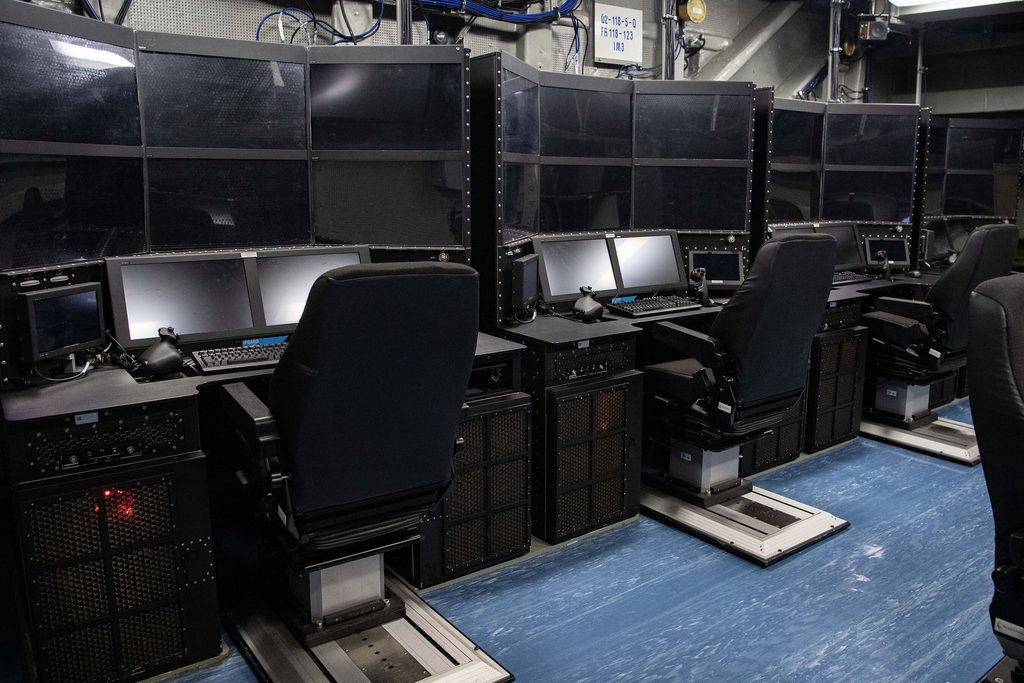
The U.S. Navy has doubled the number of aircraft carriers equipped to fly the MQ-25A Stingray unmanned aircraft. A second operational MD-5C Ground Control Station is now in place, according to Lockheed Martin. The expansion took five months.
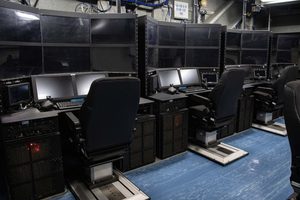
USS Theodore Roosevelt (CVN 71) received the first operational MD-5C in March 2026. USS Ronald Reagan (CVN 76) followed in August. Each system sits inside the Unmanned Air Warfare Center, the dedicated onboard command centre for unmanned carrier aviation.
Inside the system
The MD-5C is a system-of-systems. It combines the government’s Command, Control, Communications, Computers and Intelligence network, additional government-produced ancillary equipment, and Lockheed Martin’s MDCX software and hardware.
Lockheed Martin’s Skunk Works engineered MDCX, the autonomy platform at the core of the station. Navy operators use it to plan and execute missions and to command the MQ-25A. The capability extends the reach of the carrier air wing and frees manned aircraft for higher-priority missions.
Navy and industry response
Capt. Daniel Fucito, PMA-268 program manager, said the two centres bring the service closer to integrating unmanned carrier aviation into the fleet. He credited the joint Navy and Lockheed Martin team and said both carriers are ready to fly the MQ-25A. Pairing unmanned and manned aircraft, he added, builds a more resilient and adaptable force.
Ben Tongue, MDCX Program Manager, described the platform as a ready-now, open-architecture command and control system. He said the company is working closely with the Navy to build the command and control backbone for the Carrier Air Wing of the Future.
Lockheed Martin says the installation continues a run of MDCX milestones across ship, shore and flight test. The company points to proven autonomy, multi-platform control and scalable operating footprints.
Learn more on Lockheed Martin’s website