On the middle day of our two conferences the focus was on training to deal with whatever fate threw at damage control and search and rescue teams — wherever in the world they happened to be.
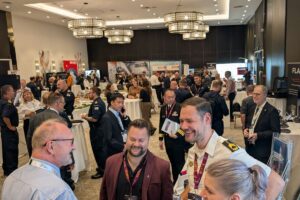
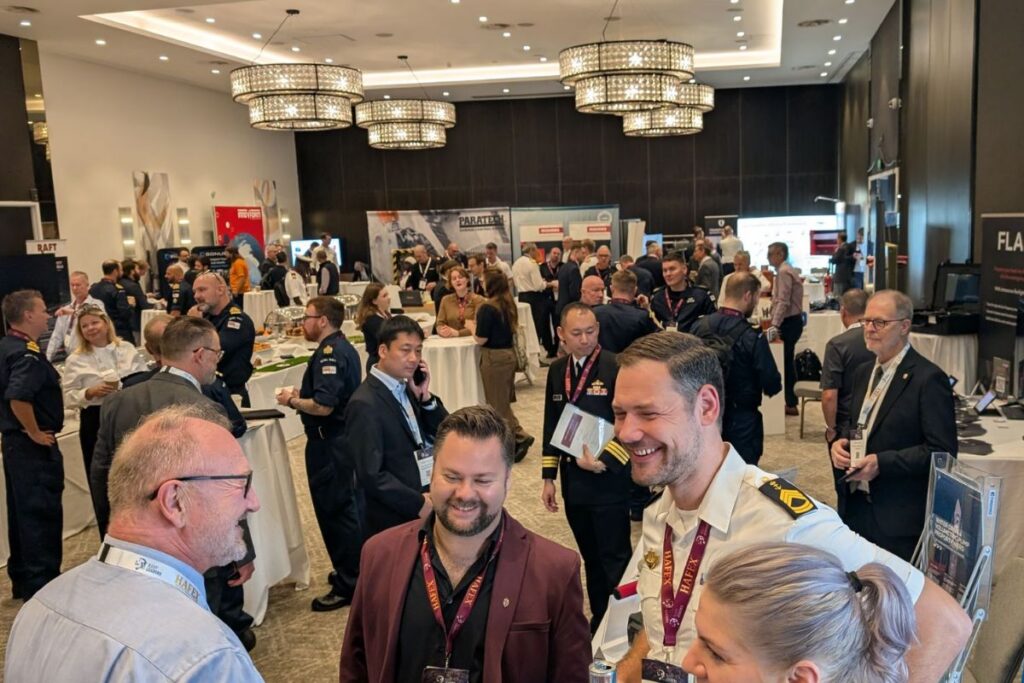
Over three days more than 600 delegates are set to come to Hilton Southampton – Utilita Bowl for Naval Damage Control 2026 (NDC 2026) and its sister event staged side by side, Maritime Search And Rescue 2026 (MSAR 2026).
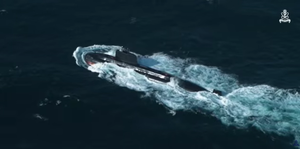
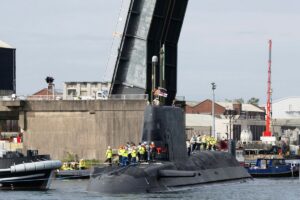
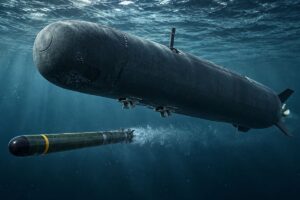
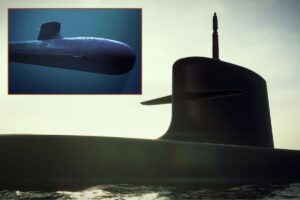
On Day Two of the NDC 2026 conference we kicked off with a session on the Royal Navy’s approach to submarine damage control training.
As delegates heard, there are fundamental differences compared to surface ships: not least the constraints of confined volume, a shared atmosphere, neutral buoyancy, and an absolute need for propulsion.
As the speaker pithily observed: “Things can go wrong very fast.” The first minute of dealing with onboard fires, particularly, is vital, while the blaze is small. After as little as ten minutes it becomes a whole-submarine problem.
This is why submariners take a whole-crew approach to damage control, rather than relying on specialised teams. The key approach is “continuous aggressive attack” to counter fires, with whole crew involved.
Matters are complicated in many ways, not least of which is operating with breathing masks immediately limits mobility — you can only move as far as your air hose extends.
Also, there’s a need to move to periscope depth to vent smoke, but this goes against the whole ethos of submarine operations: the desire to stay hidden. It also means the boat is affected more by surface conditions
Small hatches and low freeboards makes evacuation difficult and often impractical. And as the speaker observed: “We are very aware of what throwing water around a boat does, and the impact it has on buoyancy.”
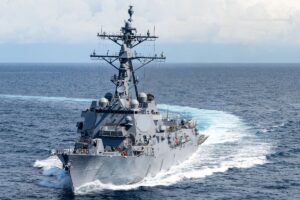
Sticking with the RN, there was also a talk on Chemical, Biological, Radiological, and Nuclear Damage Control (CBRNDC) training in carrier strike groups (CSGs).
We heard about the recent exploits of HMS Prince of Wales, which in the last 18 months has been on Operation Highmast to the Indo-Pacific, covering 40,000nm in the process, and Phase I of Operation Firecrest, a High North deployment to the Arctic and North Atlantic.
HMS PoW has about 1,600 personnel on board fully staffed, and has six damage-control zones numbered 1-5 from stern to bow, plus zone 6 which is the aircraft hangar.
Up to 240 personnel are available to deal with the most serious damage control incidents: 65 for low-level incidents, a further 95 in Enhanced Readiness Posture and 90 more for situations requiring a full Emergency Stations response.
Uniquely, the carrier has a training organisation organically embedded within the ship’s company, and it is the team’s full-time role, not combined with other duties. It organises weekly training schedules, typically including two exercises per week: one minor and one major.
Simulated incidents might include collisions with refuelling tankers, floating containers impacting the ship’s hull, or mechanical failures leading to fires or floods.
Challenges include personnel turnover: the speaker said in the 18 months he’d been embarked, about 75% of his team had changed. Retention of senior qualified staff was particularly hard due to job rotation and promotions, and rotation of embarked air crews presented another hurdle.
Asked what one capability he’d like to add, he mentioned systems such as FLAIM’s mixed reality simulator being exhibited at NDC 2026, which the RN was in the process of acquiring to help “increase understanding of fire behaviour” among his teams.
A later presentation in the NDC theatre offered damage control teachings from across the pond, with insights from the U.S. Navy.
This took in studies of, and attempts to help sailors cope with, the stresses that come with damage control activities.
The target was not to reduce stress per se, but rather to give transferable skills and train personnel to recognise, regulate and use their stress responses more effectively.
Delegates heard how a device was clipped on a participant’s ear during drills which measured physiological responses and downloaded the data to an app for later analysis.
“There’s real potential for this to improve the performance of our most valuable assets, which are our sailors,” the speaker enthused.
He also talked about a nascent programme being looked at which would create an onboard real-time network monitoring the personal health of every sailor on a ship.
Potential stumbling blocks included signal propagation, ensuring sailors kept their personal electronic devices on them and functioning properly, and controlling signal emissions beyond the confines of the ship so as not to compromise ship safety.
One striking comment was: “The thought of having 250-300 extra Bluetooth-enabled devices rolling around a ship strikes me as a bit of a nightmare.”
To illustrate the potential pitfalls, the speaker cited a well-publicised incident from March this year where a French naval officer had inadvertently leaked the exact position of the nuclear-powered aircraft carrier Charles de Gaulle by publicly logging a run on fitness tracking app Strava.
Meanwhile, in the MSAR 2026 conference delegates enjoyed a Danish presentation on the challenges of conducting SAR operations in remote Arctic regions, with particular reference to Greenland.
“Operating in the Arctic is very different to most of the rest of the world,” was the starting point, with the speaker also admitting: “There’s a lot of political interest in Greenland at the moment, but I won’t get into that.”
The area of responsibility was described, with a startling capacity for understatement, as “quite large.”
It includes the world’s largest National Park, North East Greenland Park, which measures a cool 972,000 square kilometres. For context, the whole of Denmark measures circa 43,000sq km, and Germany 350,000sq km. Despite its vastness, this area is inhabited by only about 30 people!
Meanwhile, the maritime search and rescue region (SRR) measures 2,000 nautical miles North-to-South and 1,000nm East-West.
“We are heavily reliant on our neighbours,” admitted the speaker, adding: “There is a fairly large distance between Greenland and anything else.”
There is a population of about 56,000 in Greenland; 22,000 in Nuuk where the Joint Arctic Command is based, and most of the remainder along the western coastline.
There’s very little infrastructure: no roads connect the different settlements and all goods have to be either flown or shipped.
One challenge would be coping with onward transfer of casualties following a rescue; and in a mass rescue operation (MRO) there’s a significant danger of overloading the resources available in existing settlements.
SAR teams are reliant on satellite communications, because HF radio signals bounce off snow and ice in unpredictable ways.
Parts of the coastline are icebound for large parts of the year, yet, climate change means increased traffic levels, both cargo and cruise ships. Some cruise ships are now even visiting the North Pole.
SAR teams provide 24/7 readiness via a mixture of military surface vessels; embarked helicopters; a fixed-wing aircraft for long-range search; patrol vessels; and even dog sled teams.
Hopes for the future include more ice-capable ships, more helicopters and better infrastructure, but as the speaker put it: “That is above my pay grade, because it all costs a lot of money.”
There are also hopes that the acquisition of new high-tech systems that detect and acquire mobile phone signals can “take the search out of search and rescue; it gives us more time to rescue people.”
Asked what scenario gave him most sleepless nights, he replied: “If a fairly large cruise ship bashed into a ship with hazardous goods on board, how would we cope with that?”
He said they currently had no means to neither embark 200-300 passengers, nor cope with large amounts of environmentally toxic materials. Saving lives would take primacy over environmental concerns, but both aspects would pose significant challenges.
This is why SAR organisations extol the virtues of a voluntary industry safety initiative known as the Polar Code encouraging the concept of sailing in pairs, or ‘twinning.’
The speaker added: “We have a saying in the Arctic: only a cruise ship can save a cruise ship.”
Back in the NDC theatre, one afternoon presentation examined managing the risks of lithium-ion battery fires on naval vessels.
Lithium-ion (Li-ion) battery cells are used widely in a range of devices with varying energy capacities ranging from the 1 watt/hour range up to 1 Mw/h and beyond, and all of them pose risks.
Damaged or malfunctioning cells going into thermal runaway can produce heat in excess of 1,000C; sparks and flames; and toxic and flammable gases creating potential explosion risks if allowed to accumulate in confined spaces.
Li-ion fires can also reignite after being initially extinguished, hours and sometimes even days later due to their internal energy capacities, with the possibility of propagating into previously uncompromised cells.
Delegates heard risks should be mitigated via realistic risk assessments based on true worst-case scenarios: the speaker warned not to take manufacturer’s words as gospel.
Assessments should also look at the probability of an incident occurring, but as limited data is so far available, pessimism was advisable. Delegates were told: “I would not recommend basing the safety of your ship on an assumed low probability.”
Potential fire consequences should be considered, as should mitigations including safe storage spaces; limiting numbers of systems or battery energies; installing sensors to detect problems; automatic suppressant mechanisms, perhaps with inert gases; and safe venting procedures.
The speaker also warned that Li-ion fires did not necessarily require external causes; manufacturing defects could potentially cause fires to start.
In the MSAR conference room, the day was rounded off with a talk on how wargaming can potentially be used as an analytical training tool in Arctic and Antarctic SAR.
Its relevance is unquestioned against a backdrop of the rising amount of shipping using the Northern Sea Route: in 2025 1,812 ships entered the Polar Code area, representing an increase of more than 40% since 2013.
And the region’s inherent remoteness means the Polar Code assumes a five-day expected wait time for survival equipment.
These features make the topic particularly suitable for analytical wargaming: simultaneously too complex for intuition, and too rare to draw on experience.
Versions of a game devised by an expert from the Italian Coast Guard Auxiliary have been drawn up with two broad themes: an Iceberg Ahead variant and a Lake SAR version.
The game is free, downloadable for print-and-play, and requires only a six-sided dice as random event generator, and a standard metric ruler.
Each iteration takes about two hours to play, includes time pressure with a strict five-minutes-per-turn rule, and naturally, the aim is to improve decision-making to help save lives.
As with Day One, today’s presentations and discussions have proved as diverse and wide-ranging as they have been informative: a comprehensive summary is beyond the reach of any single report.
Doubtless our final day tomorrow will continue in the same vein.