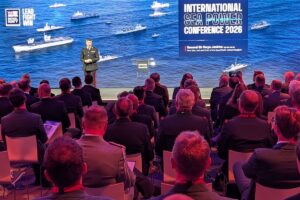
The Royal Navy’s first Atlantic Net sensors guarding the GIUK gap will be in the water next year, delegates at the International Sea Power Conference (ISPC) were told.
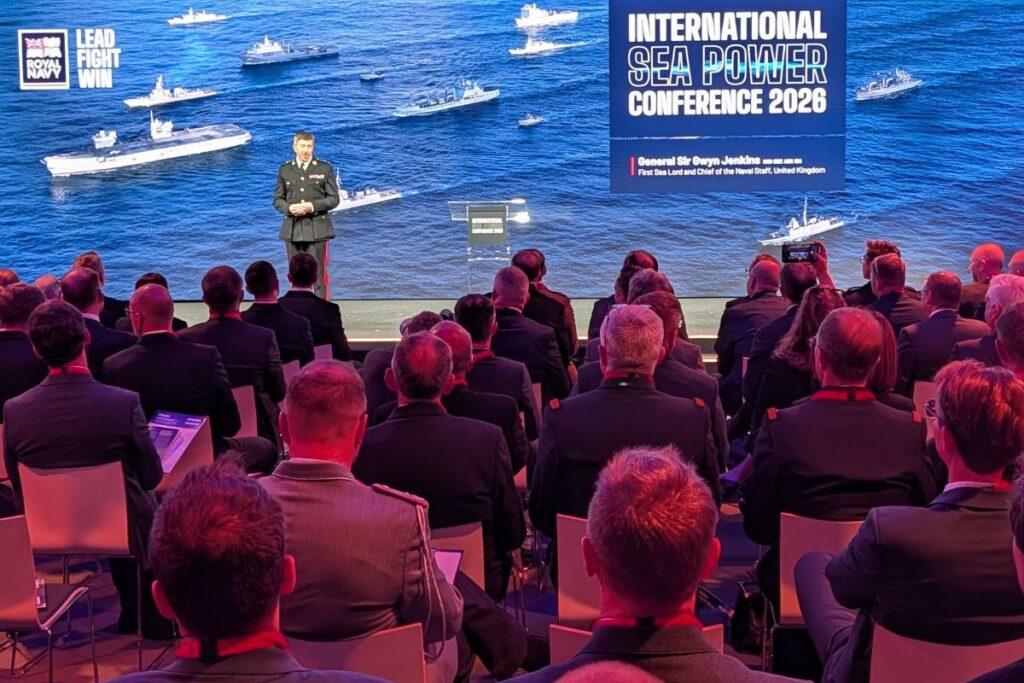
At today’s ISPC in Oslo, Norway, hosted on board British carrier HMS Prince of Wales, Government minister Luke Pollard announced an initial £90 million deal with British company Ocean Infinity Solutions to provide maritime surveillance.
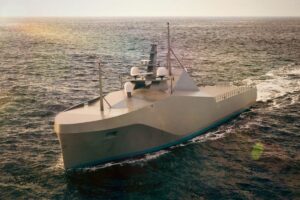
Atlantic Net, part of its wider Atlantic Bastion initiative, will see the Navy equipped with a new network of autonomous systems operating across the North Atlantic. The initial sensors will include coverage of the GIUK gap, the waters stretching between Greenland, Iceland, and the U.K. which form the gateway between Russia’s Northern Fleet and the North Atlantic.
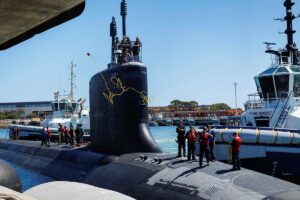
Sensors will help detect Russian submarines and will provide submarine-hunting warships and Astute-class submarines with earlier warning of threats and a clearer picture of activity beneath the surface.
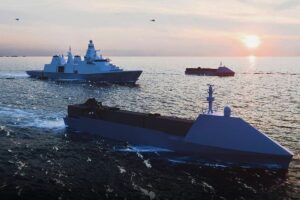
The wider RN vision is for uncrewed systems also able to patrol the depths of the seas, hunting down threats.
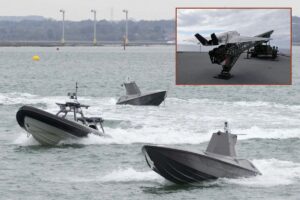
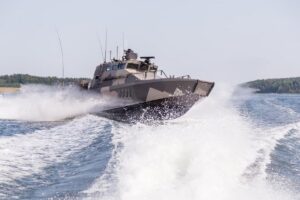
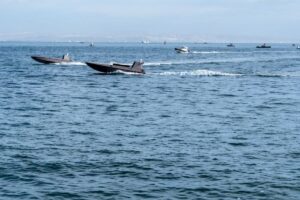
Mr Pollard, the minister for defence readiness and industry, also announced a new deal with Saab UK, which will integrate its lightweight counter-drone radar systems into the RN’s new K3 Scout uncrewed surface vessel (USV) fleet to help protect ports and critical infrastructure.
And he challenged Joint Expeditionary Force (JEF) nations to move toward a “JEF-wide” supply chain where a British frigate could be repaired in Estonia or a Dutch warship restocked in Norway, moving, as he put it, “from interoperability to interchangeability.”
He highlighted the role business had to play, adding: “Just as our friends in Ukraine are showing us, we cannot be ready if we don’t invest in industry.
“It is our industrial partners, our industry that sit behind our forces, that will determine whether we can sustain the fight, whether we can deter aggression, whether we can build new capabilities.”
Meanwhile, in his introductory remarks, head of the Royal Navy First Sea Lord Sir Gwyn Jenkins told attendees: “The sea remains the vital artery that sustains all of our nations: it is the non-negotiable territory which we must defend.
“Every single nation represented in this room depends on the sea for not only its prosperity but for its survival. All of our prosperity is dependent upon the sea.
“Nations have become more and more dependent upon the maritime; they have become less and less aware of that dependence. Our people rightly take their great societies for granted: food is on their shelves, data comes to their homes, energy powers their lives. Many don’t realize why and how vulnerable they have become.”
He observed: “At no time in my 36 years of a professional military career have I seen the world this unstable… I’m not telling you that war is coming, but I’m telling you that instability is here, and that our job is to be ready.”
He added: “We’re going to have to take some chances. We’re going to have to take some risk. And it’s often levelled at me, ‘We’re going too fast. Hybrid Navy is ambitious, the technology is not ready, you need to slow down.’
“I reject all of that. I reject it all, because it is not a choice.The only risk that I’m interested in is that if we have to go to war, we are not ready.
“We can’t afford to be in that position. We have to embrace what is available to us now because if we find ourselves against an opponent who has done so and we have not, we will lose.
“Our job is not to lose. Our job is to win.”