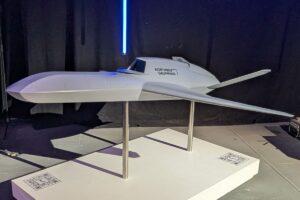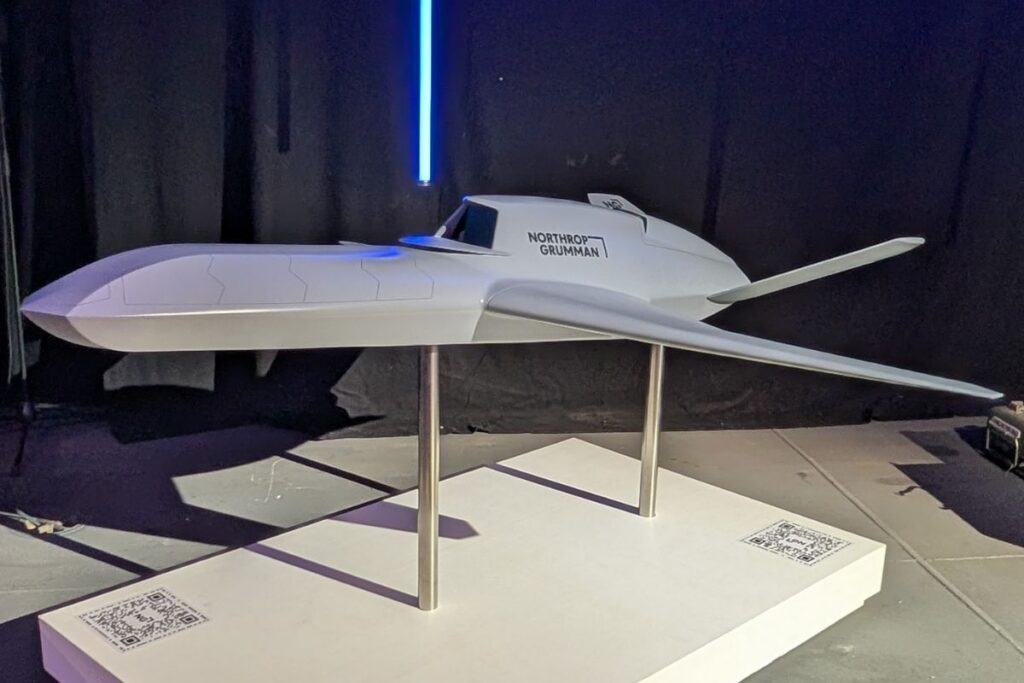
Northrop Grumman’s TALON Uncrewed Aerial System (UAS) is set to fly from a British aircraft carrier next year.
The Royal Navy’s First Sea Lord (1SL) General Sir Gwyn Jenkins made the announcement today in his closing keynote speech at the International Sea Power Conference (ISPC) in Oslo, Norway, hosted on board British carrier HMS Prince of Wales.
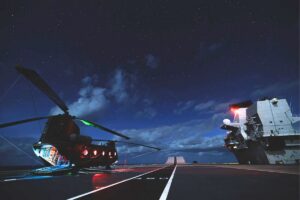
He said: “Normally, this hangar is home to our F-35Bs, Merlins and Wildcats. But in future, they will not be stationed here alone. They will be joined here by uncrewed teammates who put the ‘Hybrid’ into our Hybrid Air Wing.
“Among them will be our first jet-powered drones, known as the Collaborative Combat Aircraft, or CCA.
“Last year, I said I wanted the first of those CCAs to be launched from the carrier flight deck by next year. When I said that, there was probably a bit of scepticism in the room.
“Well today, here in Oslo, I can confirm that we are taking another big step forward. In two days’ time, on this carrier, I will sign a statement of intent with our friends at Northrop Grumman to prepare their TALON demonstrator for trials with the Royal Navy under Project Vanquish.
“That demonstrator is here with me on this stage. Through that agreement, we will work towards a demonstration in U.K. waters in 2027, including a launch from the carrier.”
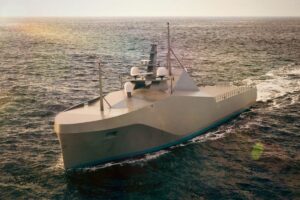
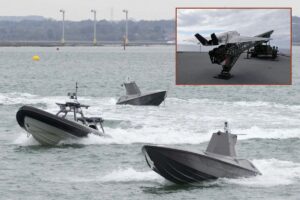
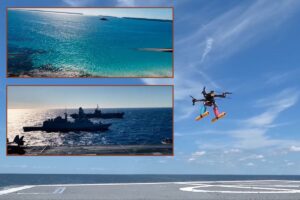
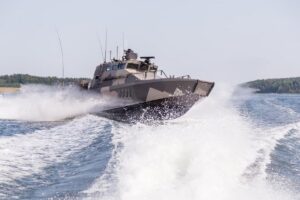
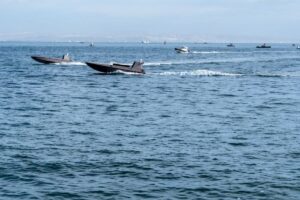
In the same speech the 1SL also revealed the Kraken K3 Scout uncrewed surface vessels (USVs) in the RN’s new 1st Autonomous Squadron (1AS) would be fitted with a counter-drone capability in 2027.
He said: “That will give us a lower-cost and adaptable way to defeat airborne threats, preserving our most advanced missiles for the threats that genuinely require them.
“That is a clear advantage that Hybrid Navy gives us. By integrating these interceptors on Kraken, we are learning lessons from Ukraine and demonstrating that a sledgehammer is no longer required to crack a nut.”
And earlier in the day U.K. Government minister Luke Pollard had announced Saab UK would also integrate its lightweight counter-drone Giraffe radar systems into the K3 Scouts fleet to help protect ports and critical infrastructure.
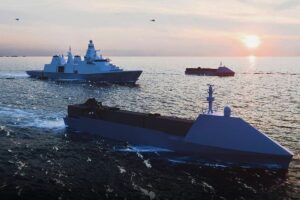
He also said the Royal Navy’s first Atlantic Net sensors would be in the water in 2027, courtesy of a £90 million deal signed with British company Ocean Infinity Solutions to provide maritime surveillance in the GIUK gap.
This afternoon at the same conference ten north European maritime chiefs also signed the JEF Northern Navies Initiative in Oslo, Norway, on board British aircraft carrier HMS Prince of Wales.
The new U.K.-led collective force seeks to boost maritime security in the North Atlantic, the Baltic Sea and the High North. Ten nations make up the Joint Expeditionary Force (JEF): Denmark, Estonia, Finland, Iceland, Latvia, Lithuania, the Netherlands, Norway, Sweden, and the U.K.
- Read more details on the Atlantic Net announcement