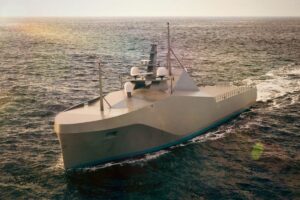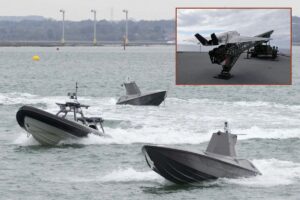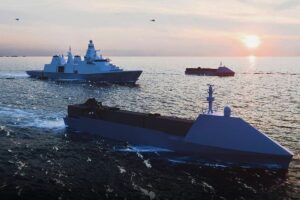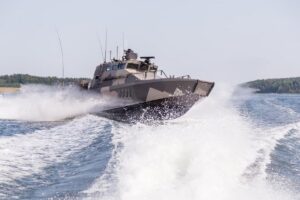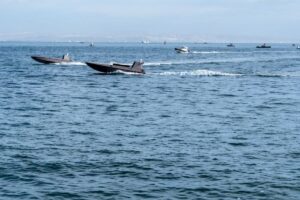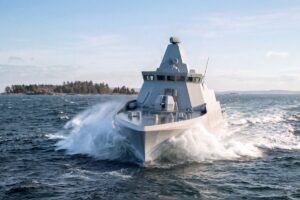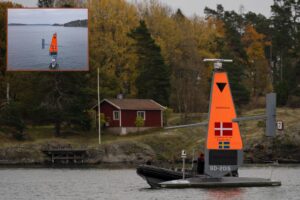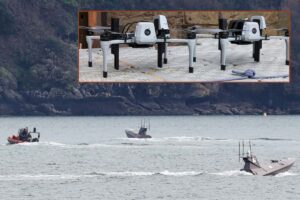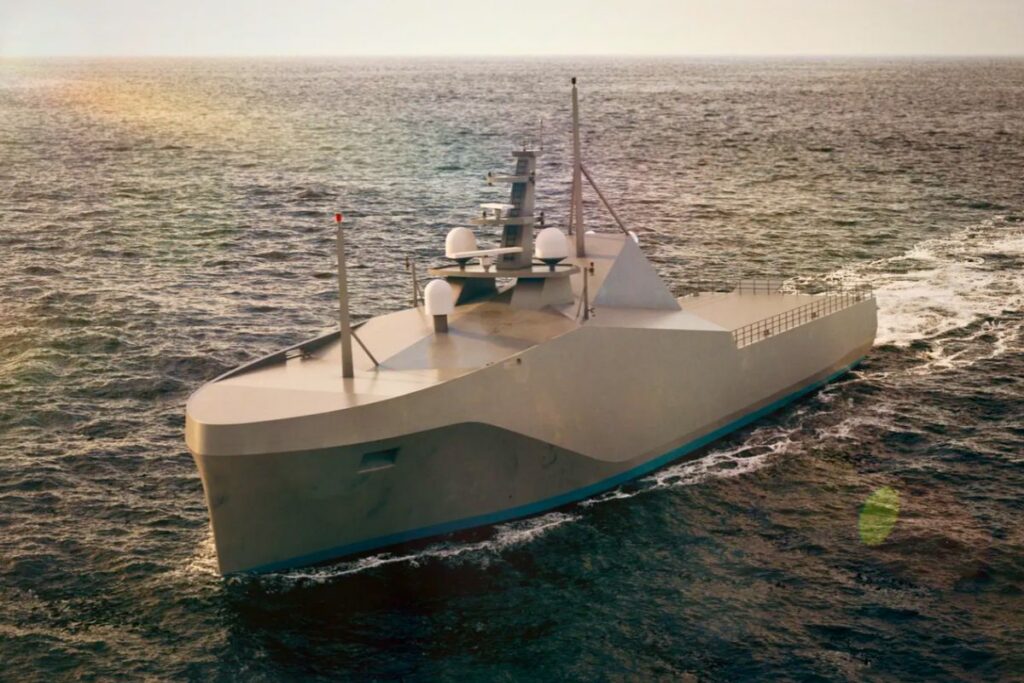
Kongsberg Maritime has unveiled its new family of Arctic Hunter uncrewed surface vessels (USVs) for the first time.
The Norwegian maritime technology company has explicitly stated the new drone vessel has been designed to meet the stated requirements of the British Royal Navy’s Hybrid Navy concept.
The firm’s launch statement noted: “In response to the U.K. Royal Navy’s development of its hybrid fleet of crewed and uncrewed assets, the Arctic Hunter USV combines proven commercial ship design with Kongsberg Maritime’s remote and autonomous technologies to deliver resilient and persistent anti-submarine warfare (ASW) capability in the High North.”
The company is hoping that the RN will decide the new USV will best meet the criteria for the force’s Type 92 ASW surface vessel, which is likely to be primarily tasked with uncrewed military sensing operations, although a modular design means it can be adapted for other missions too.
As per the firm, the new platform will come equipped with Thales UK’s sovereign submarine-hunting sonar and secure military communications systems.
The Kongsberg statement added: “Operating from a forward support base inside the Arctic Circle, the Arctic Hunter USV is designed to provide a persistent sensing capability to augment the existing multi-asset ASW infrastructure in the High North.”
Kongsberg Maritime said the first new drone boats could be ready for operational deployment by the end of the decade. Shipbuilding partner Balaena Maritime has been earmarked for production of the USVs at its Birkenhead yard.
Company CEO Lisa Edvardsen Haugan commented: “Atlantic security is an absolute priority, and we believe that the Arctic Hunter USV offers a robust and practical response to the growing need for additional submarine detection capability.”
- You can read more details on the Kongsberg website