The Turkish Navy has just commissioned Havelsan’s Sancar armed autonomous uncrewed surface vehicle (USV) into active service.
The 12-metre, water-jet propelled drone boat can be used for either ISR missions or surface warfare; it is capable of 40 knots and is armed with a 12.7 mm remote-controlled gun.
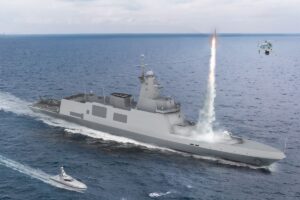
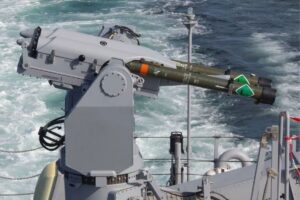
Its modular design means it can also carry either a launch and recovery system (LARS) for other drones, and side-scan sonar, or a 2×2 surface-to-surface missile system.
It is controlled via a version of the firm’s Advent combat management system (CMS); the same CMS has also recently been integrated on the Turkish Navy’s amphibious assault ship TCG Anadolu. That vessel uses the same CMS to control Bayraktar TB3 uncrewed aerial systems (UAS), which can also be used for either ISR or strike roles.
Havelsan noted: “Developed by Havelsan in line with the operational experience and know-how of the Turkish Naval Forces, the network-enabled Advent CMS and FleetStar provide naval platforms with advanced command and control and data management capabilities.
“This architectural framework enables the fusion of data collected from different sensors and platforms into a single operational picture, significantly enhancing speed, coordination, and situational awareness in complex naval operations.”
As per a Havelsan statement, the Turkish Navy expects to use the Sancar USV for “a wide range of missions including reconnaissance, surveillance, intelligence, surface combat and the protection of critical maritime assets.”
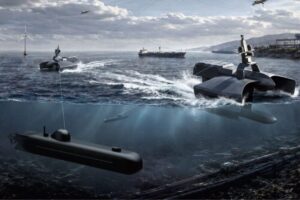
The Sancar is believed to be the fifth kind of USV to enter service with the Turkish Navy, produced by a range of domestic manufacturers and covering a spectrum of operational roles also including mine countermeasures (MCM) and anti-submarine warfare (ASW)
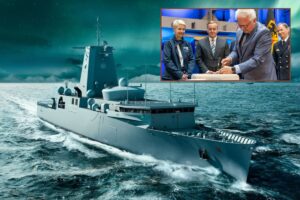
Turkiye’s President Recep Tayyip Erdogan was present at Tuesday’s twin-centre ceremony held in Ankara and at Aksaz Naval Base.
As well as commissioning the new Havelsan USV, there was a groundbreaking ceremony for Havelsan’s planned Simulator Production and Integration Facility.
The statement noted: “It will be capable of simultaneously producing and integrating up to 16 Full Flight Simulators, while also supporting serial production activities for air, land and surface robotic and autonomous systems.”
The event also marked the inauguration ceremonies of a new technology centre and an additional CMS facility at Havelsan’s Technology Campus.
- You can read more details on the Havelsan website