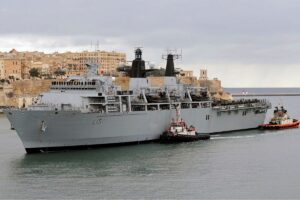
Royal Navy Type 45 destroyer HMS Duncan fought off successive drone attacks for 72 hours off the Welsh coast on Exercise Sharpshooter.
The three days of drills saw the Portsmouth-based warship sail to the Aberporth Range in Cardigan Bay so crews could experience a taste of real-life operations similar to those faced by HMS Diamond in the Red Sea.
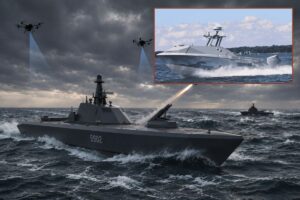
The exercise required the ships crew to fend off assaults from a mix of synthetic (simulated) supersonic and hypersonic threats and live attacks by surface and aerial drone swarms moving at up to 200mph.
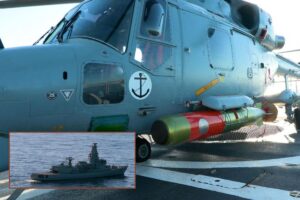
HMS Duncan and her Wildcat helicopter from 815 Naval Air Squadron used a variety of sensors and weapons to identify, track and defeat the attacks . These included the helicopter’s Martlet air-to-air missiles, and ship-based heavy machine guns, Phalanx Automated Gun, 30mm gun and the 4.5in naval gun.
HMS Duncan’s CO Commander Dan Lee described Sharpshooter as an invaluable opportunity, adding: “The ship’s company rose to every challenge, delivering successful layered‑defence engagements while simultaneously dealing with realistic damage‑control scenarios.
“I am immensely proud of how the team performed; their dedication ensures that HMS Duncan remains ready to fight and ready to protect.”
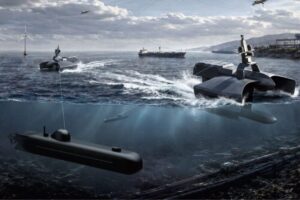
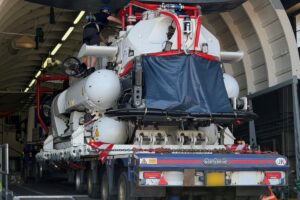
The training was delivered by the Royal Navy’s specialist Fleet Operational Standards and Training (FOST) teams and defence firms QinetiQ and Inzpire; it featured Hammerhead uncrewed surface vessels (USVs) approaching at speed of up to 50mph and Banshee Whirlwind aerial drones flying at more than 200mph.
Qinetiq’s Chief Executive, UK Defence Will Blamey noted: “Our combination of live and synthetic threats mean we can evolve training scenarios to ensure we are providing the very latest in threat representation, helping our warfighters to achieve mission-readiness at pace.”
- You can read more details on the Royal Navy website