We might have wrapped up our Naval Damage Control (NDC) and Maritime Search And Rescue (MSAR) conferences today, but there was no sign of a tail-off as the end neared: it was full speed ahead all the way to the finishing line.
Today the NDC conference attendees chiefly focused on the theme of platform survivability. To kick off there was an examination of strategies to reduce platform vulnerability, both in the wider sense of ship “kills” and looking at technologies which could help mitigate risks of fire and flood.
It was noted that ships didn’t necessarily have to be sunk to be taken out of the fight: discussions centred on mission kills, and how layered survivability could be thought of as an inversion of a staggered kill chain expressed in terms of conditional probabilities.
In later presentations attention was drawn, too, to the cyber dimension of damage control, with particular reference to the FREMM frigate programme as a case study. Other topics through the day included uses of composite materials on warships, high-pressure systems on vessels, and observations on the challenges of firefighting in naval bases.
And in the afternoon among the many highlights was an exceptionally clear-eyed account of the introduction into service of a new Electronic Damage Control Management System on Royal Fleet Auxiliary vessels which pulled no punches about the teething issues involved, taking in software crashes, latency and overloaded computer systems.
Meanwhile those in our MSAR event enjoyed discussions largely revolving around the twin themes of technology and innovation.
The day began with ways in which emerging technology could assist decision-making and the advantages of an open-standard and fully integrated data system including video feeds.
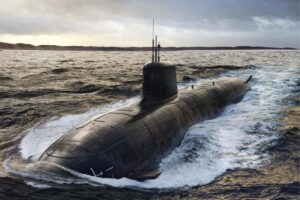
There was a fascinating presentation on submarine rescue, with particular reference to the U.K. SMERAS (Submarine Escape, Rescue, Abandonment and Survival) programme. The audience learned about the first-response teams on 24-hour standby to assist anywhere in the world when called upon.
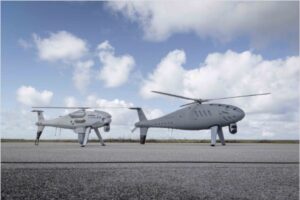
We learned about plans to incorporate UAS and UUV assets into the man-portable packages those teams carry, as well as the world-leading facility at HMNB Clyde which can simulate wind, rain, and waves inside its training pool.
And with international submarine rescue assets approaching the end of their operational life early in the next decade, there was talk of a “generational opportunity” to standardise submarine rescue systems globally.
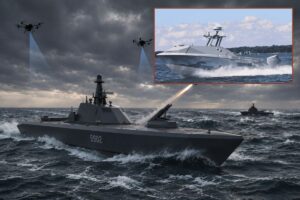
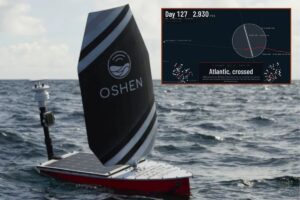
Later, there was also a thought-provoking presentation on some of the likely implications for MSAR professionals of increasing numbers of semi-autonomous and fully uncrewed vessels (or MASS: Maritime Autonomous Surface Ships) on the waves.
It was pointed out that MASS vessels were still obliged to follow SOLAS and UNCLOS regulations demanding they sail to offer assistance and rescue to ships in distress, but as ever, as it was phrased, “the Devil is in the detail.”
In other words, what would this offered assistance look like in practice? Could uncrewed ships provide shelter for people in need of rescue, or safely manoeuvre close enough to offer aid? Would they pose additional hazards for crewed SAR platforms arriving on the scene?
And conversely, could MASS vessels’ cutting-edge sensor suites and comms systems actually prove superior to those on the SAR platforms and therefore be used as a significant lifesaving asset? Should fully uncrewed ships be required by law to provide containerised life-support packages in case of emergencies, and if so, for how many people?
These are all thorny issues, but with projections suggesting that potentially 30-50% of maritime vessels could be operating at one of the four defined levels of autonomy by 2055, they are ones which need to be tackled quickly.
And with the growing prevalence of offshore windfarms, there was a timely presentation focusing on the specific challenges and considerations needed when conducting SAR operations around renewable energy sites.
For example, asymmetrical layouts of wind farm fields — sometimes adjacent but owned by different operators — can make manoeuvring into them with surface or air platforms particularly tricky, especially in inclement weather conditions.
The advent of new floating wind turbines throws up more complications: what happens if they run into difficulties being towed into position, or back into port for maintenance? What if they break free of moorings, or sink the bottom but remain only partially submerged? What hazards do their power cables present if they are floating in the middle of the water column, rather than tethered to the sea floor?
On the flip side, vessels installing and servicing windfarms can become de facto SAR assets, too: for instance, when tankers collided in the North Sea in March this year, wind farm industry ships were first on the scene and carried out much of the personnel rescue.
So many of the presentations in both conference theatres have consistently provided thought-provoking content and jumping-off points for continued debate, as well as the event providing opportunities to network and make useful business contacts in our exhibition halls.
It’s been a productive and fascinating few days in Southampton, and Navy Leaders extends its thanks to everyone who has attended, whether as presenter, exhibitor or delegate. We sincerely hope we see you all again in 12 months: unquestionably there will be just as much to discuss!