Industry firms have been showcasing uncrewed technology to the Royal Navy as its Atlantic Bastion programme to provide underwater surveillance and security in the North Atlantic advances.
As per an RN press statement, small and medium enterprises were among those recently invited to demonstrate surveillance platforms that could be used in the underwater battlespace.
Under Atlantic Net, the first phase of the Atlantic Bastion programme, the RN is seeking to set up a sensor network via a COCONO model: Contractor-Owned, Contractor-Operated, (with) Naval Oversight. It’s anticipated that the fully fledged Atlantic Bastion phase will transition into a government-owned, government-operated (GOGO) force of uncrewed platforms for persistent North Atlantic anti-submarine warfare (ASW) activities.
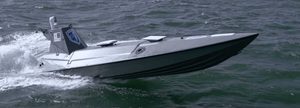
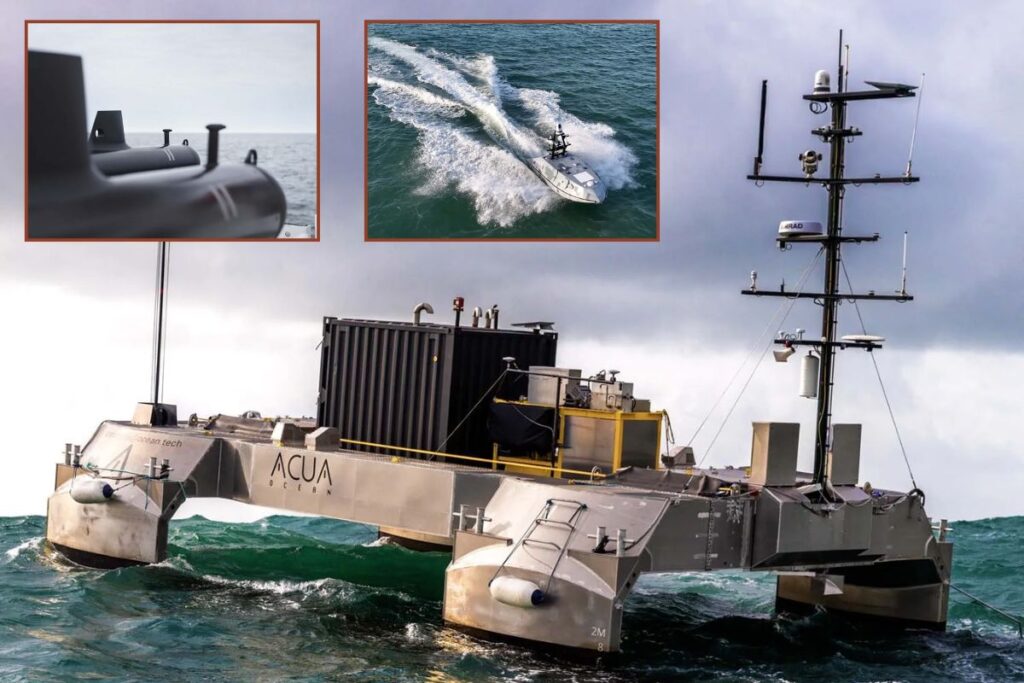
Over the last four months various firms have been showing how their commercial off-the-shelf (COTS) technology can complement existing RN capabilities. These have included ACUA Ocean, SubSea Craft, Helsing, Teledyne Marine and Zero USV.
Rear Admiral Rich Harris, the RN’s Director Develop, commented: “These demonstrations are about proving that the latest technology is ready to secure the North Atlantic and our nation’s most sensitive waters.
“Through close partnership with industry, we are integrating crewed and uncrewed systems with digital decision-making to accelerate the Royal Navy’s transition to a hybrid navy — strengthening our readiness today and ensuring we are warfighting ready for the challenges of tomorrow.”
Captain Chris Hill, Atlantic Net Programme Director, added: “With a focus on automation, sensor performance and AI, this technology demonstration programme has been pivotal in providing the Royal Navy with a focused understanding of cutting-edge developments across the anti-submarine warfare landscape, and as important, their respective readiness to deliver at pace.”
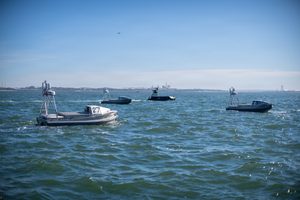
Examples of some of the technology demonstrated include seabed acoustic detection systems; uncrewed surface vessels (USVs) with acoustic and towed arrays; drones equipped with sonobuoys; and gliders and acoustic floats.
ACUA Ocean said it delivered three contracts under the Atlantic Net Technology Demonstrator (ANTD) programme; its Pioneer USV completed intelligence, surveillance and reconnaissance (ISR) tasks teamed with sensor and payload partners using sonar floats and a towed array.
Its social media post revealed: “The deployments in December and January highlighted the importance of both Pioneers modular payload capability and stability, being able to operate and deploy sensors in sea states where other USVs had to return to port.”
- You can read more details on the Royal Navy website