The NATO Centre for Maritime Research and Experimentation (CMRE) has hailed a breakthrough in protection of critical underwater infrastructure (CUI) after its research vessel RV Alliance successfully detected the acoustic signature of a ship’s anchor hitting the seabed.
The trial was conducted not far from the 2022 Nordstream pipeline blast site off Denmark’s Bornholm Island in the Baltic Sea.
The research vessel, based in La Spezia and operated by the Italian Navy, was conducting a month-long series of tests in Finnish and Swedish waters which also took in another first: sending live at-sea data to NATO’s CWIX interoperability exercise in Poland via the STANAG 4817 communication protocol.
The anchor detection heralds a vital breakthrough in the bid to protect CUI such as pipelines and data cables. Dr Robert Been, Principal Scientist at CMRE, explained: “For the first time, we’ve been able to detect an anchor dropping on the sea bottom. It was a proxy anchor — a ballast mooring — but this is a key step in building the capability to identify and respond to suspicious maritime activity in real time.”
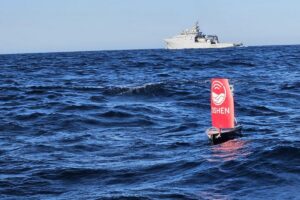
Static seabed sensors detected the drop and sent the acoustic data which was then fused with ship tracking information via NATO’s Mainsail AI-driven software system, generating an automatic alert suggesting possible sabotage.
In years to come this type of monitoring could be fed into the Baltic Sentry NATO initiative being led by NATO Maritime Command to protect Baltic Sea CUI and could even automatically trigger the deployment of an uncrewed vessel to investigate.
- You can read more details on the CMRE website and on its LinkedIn social media page