An image shared on social media appears to confirm Russian Northern Fleet subs are using drone nets in port to guard against potential Ukrainian drone attacks.
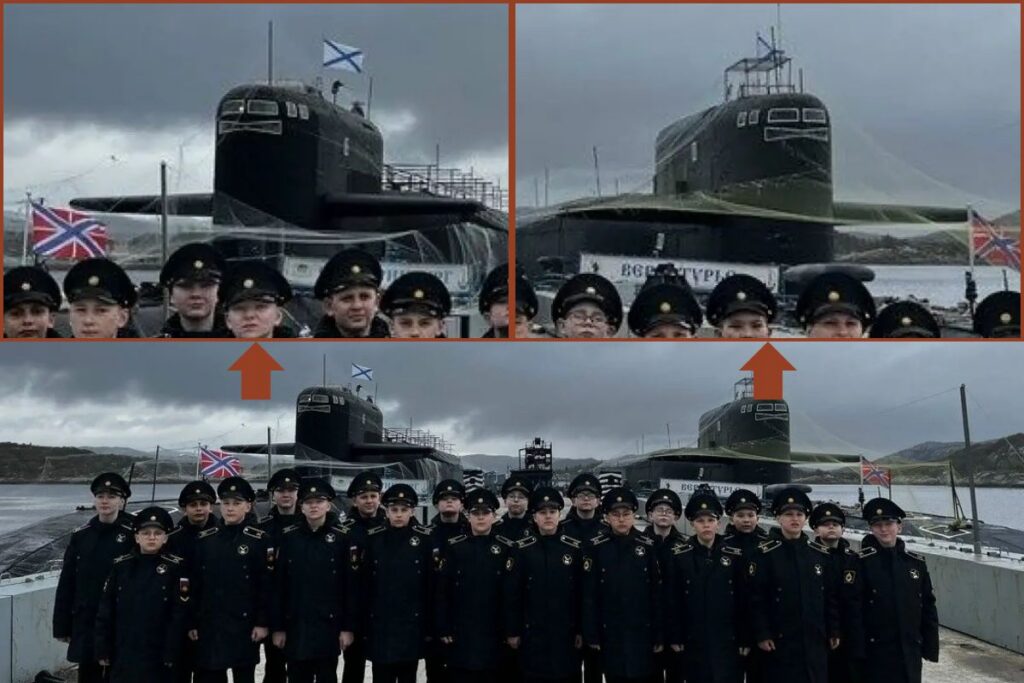
An image reproduced by Norwegian independent online newspaper The Barents Observer purportedly shows anti-drone defences installed around two submarines in the Gadzhiyevo naval base.
The base serves as the main operational hub for the Northern Fleet’s strategic nuclear deterrent and is located in Yagelnaya Bay on the Kola Peninsula, about 30 miles north of Murmansk.
As per the newspaper report: “The image, showing two submarines covered by anti-drone netting, was initially published by the Nakhimov Naval School in Murmansk, but was quickly removed from the school’s website.
“By then, however, the photograph had already been republished by several VKontakte pages and Telegram channels in the Murmansk region, providing a rare glimpse of the protective measures.”
The image, posted at the end of May after a cadet visit, appears to show two Russian Delta IV-class nuclear-powered ballistic missile submarines (SSBNs), thought to be the inactive Ekaterinburg and the operational Verkhoturye.
Both appear to be guarded by meshes covering their bows, sails and missile sections. It would appear to suggest Russia is concerned the boats are vulnerable to potential drone assaults similar to the now-famous “Operation Spiderweb” staged by the Security Service of Ukraine (SBU) deep inside Russia at the start of June last year.
Under Spiderweb coordinated strikes successfully targeted the Russian Air Force’s long-range bombers at four air bases using more than 100 quadcopter drones armed with explosives concealed in and launched from trucks on Russian territory.
To date, Ukraine has attacked Russian Navy ships berthed in Black Sea ports, and in St Petersburg, but there have been no known assaults on Kola Peninsula assets. Recently media reports have suggested similar drone nets were likely also being used to protect Russian SSBNs at the Rybachiy naval base in Kamchatka on the Pacific coast.
- You can read more details on the Barents Observer website