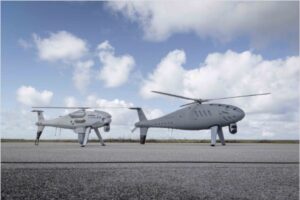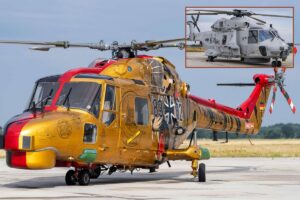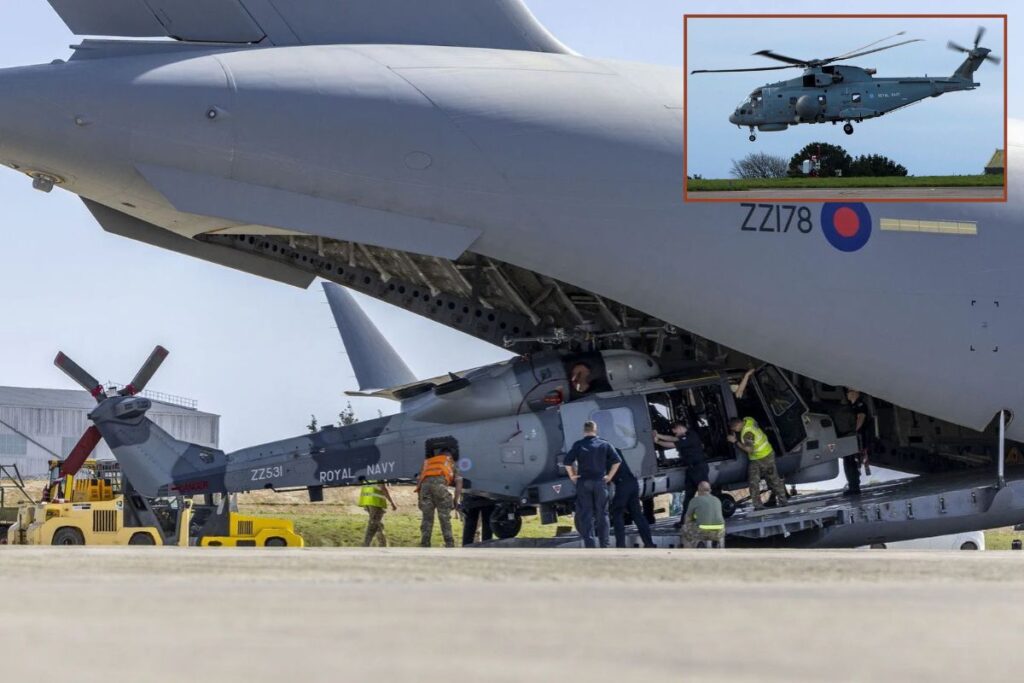
Two Royal Navy Wildcat helicopters are now in Cyprus to help fend off Iranian drones and missiles, and more air defences are on the way.
As well as the two helicopters from 815 Naval Air Squadron, which arrived in the cargo hold of C-17s, a Merlin with the Crowsnest Airborne Surveillance and Control (ASaC) radar has been dispatched.
The Crowsnest-equipped platform, which departed on Saturday, was due to cross Europe in several legs, stopping for crew rest and fuel en route.
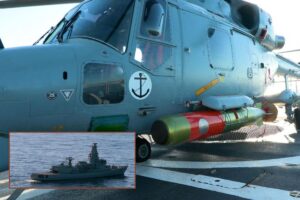
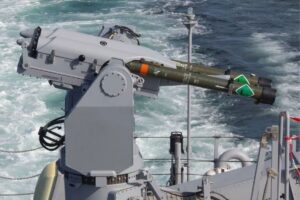
The Wildcats are armed with air-to-air Martlet missiles to take down uncrewed systems posing a threat to the island, home to British air base RAF Akrotiri.
The Crowsnest ASaC radar system fitted to the Merlin HM2 helicopter, deployed from 820 Naval Air Squadron in Culdrose, can search for incoming threats at ranges of up to 100 miles. Its Thales Searchwater system is optimised to detect small, low-altitude targets over water and in low-visibility environments.
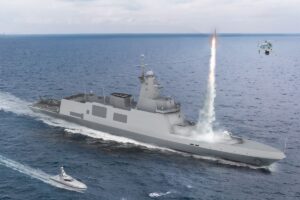
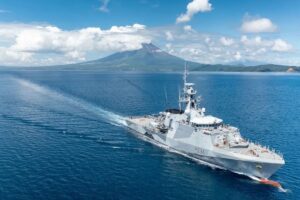
Meanwhile, RN Type 45 destroyer HMS Dragon is due to set sail for the Eastern Mediterranean this week; once departed, it’s anticipated her journey to Cyprus will take about a week.
The U.K. Ministry of Defence has stated that once on station HMS Dragon will reinforce “RAF Typhoons, F-35B jets, ground-based counter-drone teams, radar systems, and Voyager refuelling aircraft already deployed.”
Four extra RAF Typhoon aircraft are also set to be deployed in Qatar, further boosting U.K. air power in the region.
And MQ-9B SkyGuardian uncrewed aerial systems (UAS) — which the RAF calls Protector — have also been flying out of RAF Akrotiri on ISR missions as part of Operation Shader, the international anti-ISIS effort in Iraq and Syria.
- You can read more details on the Royal Navy website