Image: Royal Navy
Personnel on the Rock have slashed the bureaucratic bottleneck around lightweight drone operations — and the Anafi Parrot quadcopter is now part of the Royal Navy Gibraltar Squadron’s surveillance arsenal.
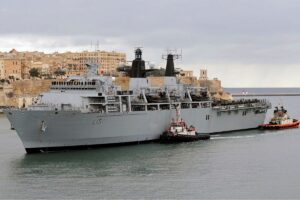
The Anafi Parrot quadcopter is now part of the intelligence-gathering apparatus available to the Royal Navy Gibraltar Squadron, and has already been used to monitor and protect visits by major UK warships to the overseas territory.
Clearance to operate it — and other sub-25kg drones — alongside Royal Navy vessels is now significantly faster, following a concerted effort by personnel serving in Gibraltar.
Existing regulations governing lightweight unmanned aerial systems, known as the ‘ship-air release’ process, were proving a serious bottleneck. The rules were designed for larger, more complex platforms and rightly remain in place for those systems. But applied to smaller, lower-risk drones, approvals routinely took weeks or even months — a timeline that risked hampering front-line operations and the Navy’s ability to keep pace with rapidly evolving drone technology.
To fix the problem, the Gibraltar team worked with safety, maritime, and naval aviation experts to produce new documentation, risk assessments, procedures, and even a dedicated app. The result compressed clearance timelines from months to days.
Personnel have labelled the new framework “the tailored route.” It was tested aboard HMS Cutlass and HMS Dagger, as well as the launches operated by the RN Gibraltar Squadron. Those trials were judged a success.
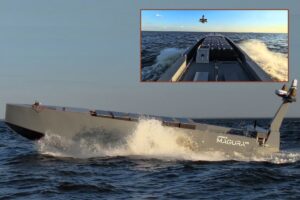
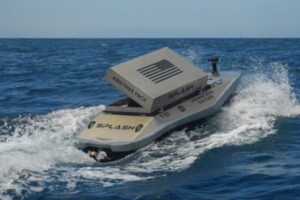
The simplified accreditation process is now being considered for drone operations from a far broader range of vessels — including XV Patrick Blackett, Vahana boats used by divers, and craft operated by 43 and 47 Commandos.
Gibraltar sits at the entrance to the Mediterranean, a strategically critical chokepoint through which significant volumes of naval and commercial traffic pass. Maintaining effective situational awareness there is a core operational requirement, not an optional capability. The ability to rapidly field surveillance drones during high-profile warship visits underlines the practical value of what the Gibraltar team has built.
As lightweight drone technology continues to evolve at pace, the ability to integrate new systems quickly — without compromising safety rigour — is becoming an increasingly important measure of operational agility for the Royal Navy.
You can read more about Royal Navy Gibraltar Squadron operations on the Royal Navy website.