Uncrewed assets operating alongside submarines, surface ships and aircraft — and quickly — forms the central theme of First Sea Lord General Sir Gwyn Jenkins’ vision for the Royal Navy’s near future.
In his speech this week at DSEI 2025 in London, he pledged to have Type 26 frigates sailing with uncrewed escorts within two years, and a jet-powered loyal-wingman-style drone concept demonstrator launching off a British aircraft carrier next year.
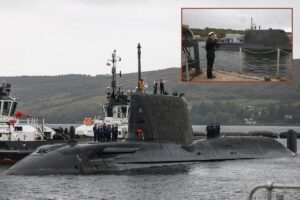
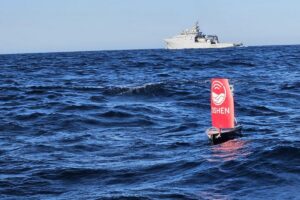
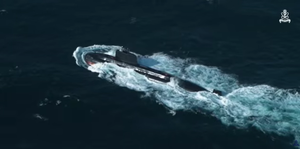
He also pledged to have the first Atlantic Bastion sensors in the water within 12 months “to provide a formidable underwater defence posture from the Mid-Atlantic Ridge to the Norwegian Sea” via a mix of networked crewed and uncrewed platforms.
He said: “Together we will reimagine the Royal Navy as a new hybrid Navy. We will move to a dispersed but digitally connected fleet of crewed, uncrewed, and autonomous platforms that will redefine maritime military power.
“We have a bold vision, which will place our country in the vanguard of autonomous warships and maritime warfare — under, on, above and from the sea.”
He added: “Let me be really clear — this is not an aspiration for some distant point in the future. It is a necessity now… If this sounds fanciful, it is not. It is my aim to have the first of our uncrewed escort ships sailing alongside our RN warships within the next two years. We will then begin scaling across the Navy.”
The First Sea Lord said the guiding principle for developing British naval assets going forward would be “uncrewed wherever possible; crewed only where necessary.”
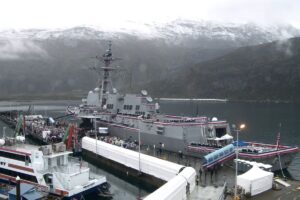
Going into more detail about how he envisioned future maritime security patrols, he said: “For the surface, imagine in the near future, a Type 26 Frigate goes into the North Atlantic. It is the most advanced anti-submarine frigate in the world, a truly world-leading ship capability with a highly trained and most effective crew.
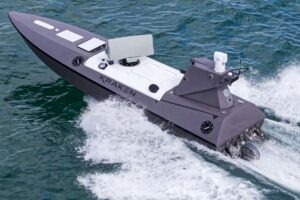
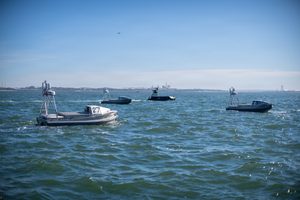
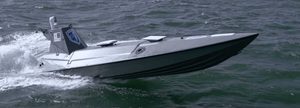
But it is not alone. It is sailing in company with two uncrewed escorts, who use AI to work in tandem with the warship. Together, they provide a three-ship task group in their own right.
The escorts will protect the parent ship, adding to its sensors, weapons and decoy capabilities. Because they have no crew, the escorts are not complex vessels, they are easy to produce at scale, even easier to configure to specific mission requirements as the task demands.”
- You can read the full details of the speech on the U.K. Ministry of Defence website