Helsing has recently completed a series of capability tests on its Lura+SG-1 Fathom platform to confirm the effectiveness of its AI-powered acoustic underwater surveillance system and push its performance envelope.
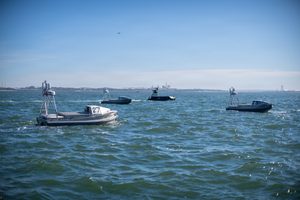
Speaking with Navy Leaders at DSEI 25 this week in London, the firm said the tests, which included sea trials, had been extremely positive and the team had been pushing the operational capabilities of the autonomous SG-1 gliders which provided the system with its data.
Programme manager Katie Raine said the team was pushing hard to extend the maximum operational depth of the gliders to the 1,000-metre mark, saying: “We’re not there yet, but we are getting closer all the time.”
She said they had been adopting a ‘destruction testing’ fail-fast, learn fast mindset to accelerate capabilities as fast as possible and the firm was very keen to be involved in the Royal Navy’s Atlantic Bastion/Project Cabot maritime security programme.
The tests over the summer are understood to have been carried out near Skye on the north-west coast of Scotland at MoD BUTEC, the Ministry of Defence’s British Underwater Test & Evaluation Centre.
Lura is the name given to Helsing’s Acoustic AI software platform, a large acoustic model (LAM) trained on decades of acoustic data which is continuously augmented.
It analyses data from, and can be used to control, constellations of SG-1 Fathom gliders via a single operator, either on shore or on board a vessel.
Each 1.95-metre SG-1 Fathom glider has an endurance of up to three months and can either patrol in a swarm or hold position on the seabed.
- You can read more details on the Helsing website