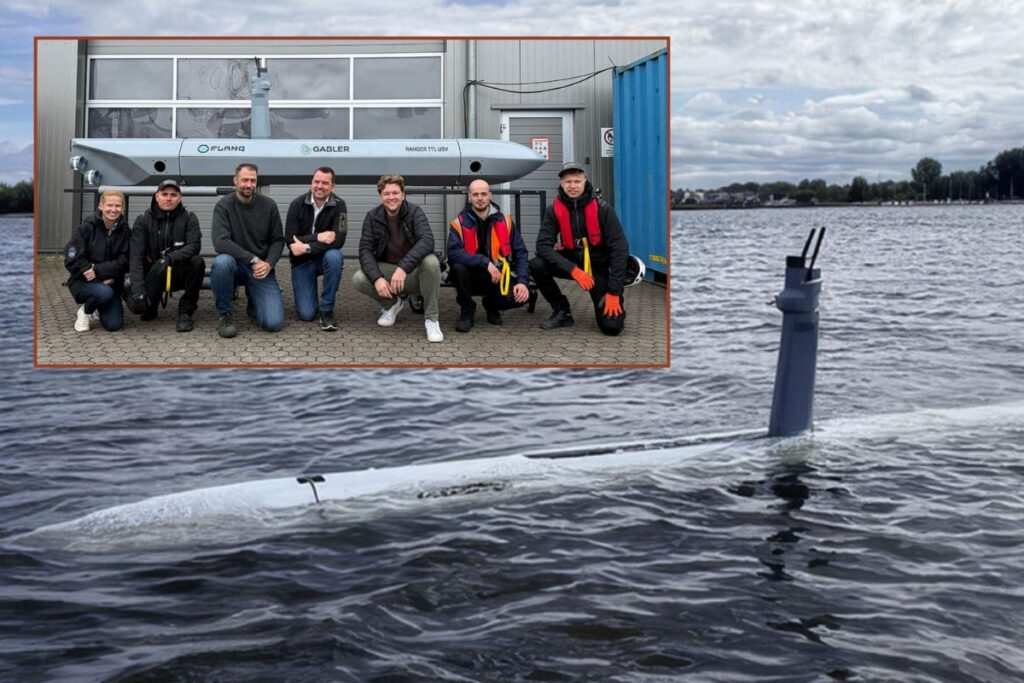
Gabler and Flanq’s torpedo tube-launched uncrewed surface vehicle (TTL USV) for strike and ISR has moved a step closer to operational readiness.
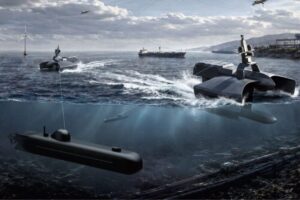
The two firms have developed Raider and Ranger, two variants of a 4.5-metre USV designed to be launched out of a standard 21-inch submarine torpedo tube.
As per a Gabler press statement, last month the drone successfully completed a Sea Acceptance Test (SAT) demonstrating the seaworthiness of its capability demonstrator.
Both versions of the electrically-propelled USV feature a folding keel and sensor mast, and a mission-configurable payload bay. The Raider is designed as a one-way-effector (OWE) strike variant with an explosive payload.
The Ranger variant is conceived as a reusable intelligence, surveillance and reconnaissance (ISR) asset which can be fitted with a variety of sensors.
Both systems are leveraging Flanq’s long experience in designing and developing autonomous maritime systems, mission software, AI-enabled autonomy and open capability architectures. Gabler is responsible for the programme’s host platform integration and commercial aspects.
Gabler noted: “The ability to rapidly deploy uncrewed, attritable systems from exquisite platforms such as submarines and ships significantly expands operational flexibility, reduces risk to personnel and enables entirely new mission concepts for intelligence, surveillance, force protection and other maritime defence applications.”
Its TTL USV Project Lead Felix David said: “Successfully completing the SAT marks another important milestone in the development of our TTL USV programme. The tests confirmed the maturity of the vehicle at this stage of development while demonstrating the excellent progress achieved by the joint team.”
And Flanq’s Chief Technology Officer Jannik Sauer commented: “We’re combining commercial-off-the-shelf technologies and operational know-how to create solutions aligned to future maritime missions. June’s successful SAT shows how conventional naval platforms, and next-generation autonomy can be brought together to create entirely new capabilities for domain advantage.”
- You can read more details on the Gabler website and the Flanq website