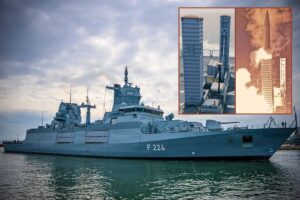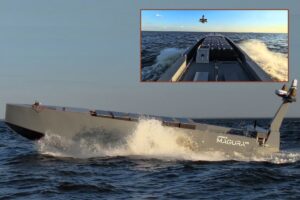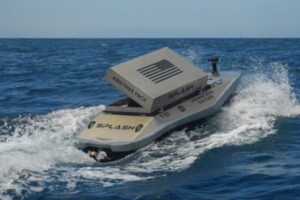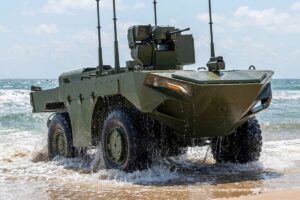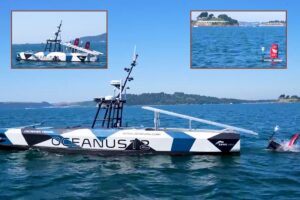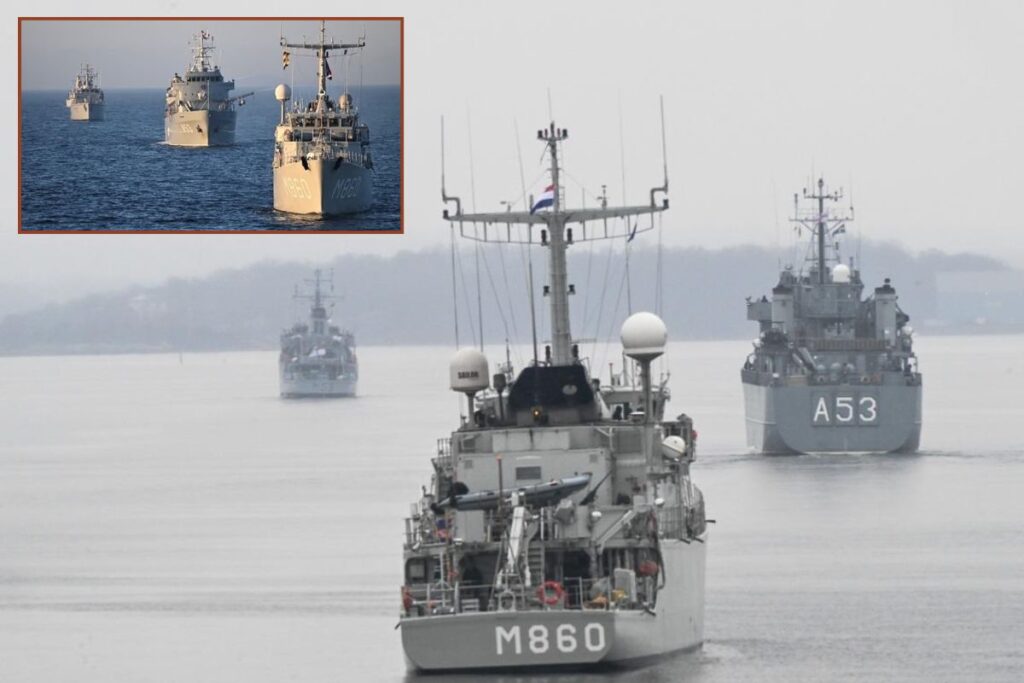
NATO minehunters in the Baltic repelled waves of assaults by aircraft, boats and drones — but this time it was just a case of practice makes perfect.
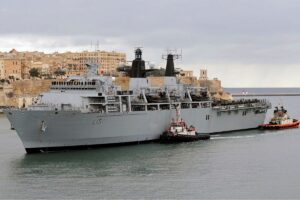
The two-week NATO exercise Baltic Mine Countermeasures (MCM) concluded on Friday in the Baltic Sea. Led by the German Navy, it took in assets from nine NATO allies and partner nations, including those currently serving as part of Standing NATO Mine Countermeasures Group One (SNMCMG1).
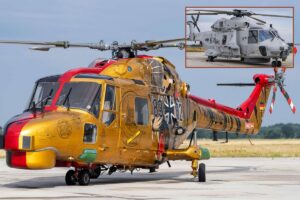
A Dutch Ministry of Defence press statement described the involvement of Royal Netherlands Navy (RNLN) ship HNLMS Schiedam’s participation in one exercise as follows: “Drones, boats, and aircraft repeatedly approach the minehunter Zr.Ms. Schiedam and other ships.
“Crews fight against the attackers, but the hunt for mines continues as usual. Naval vessels in the Baltic Sea face an asymmetrical threat. This means there is a threat from both the air and underwater.”
As per NATO’s Allied Maritime Command (MARCOM): “While mine countermeasures remained the core focus, MCM Baltic placed strong emphasis on seamanship, coordination and fundamental naval skills.
“Participating crews conducted navigation drills and communication exercises to build a shared understanding across different national procedures.”
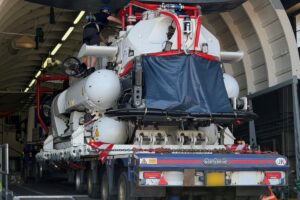
The drills during the 14 days of exercises in the Baltic Sea took in mine clearance diver conducting identification and neutralisation tasks, and the deployment of uncrewed underwater vehicles (UUVs) to detect and classify mine threats.
Head of SNMCMG1, Polish Navy Commander Kacper Sterne, commented: “Exercise MCM Baltic demonstrated a high level of Allied readiness to respond to complex threats in a strategically important region.
“Through regular and realistic training, NATO continues to ensure maritime security and freedom of navigation in the Baltic Sea, underscoring Allied unity, determination and readiness.”
- You can read more details on the Dutch MoD website and the MARCOM website