Royal Navy Type 45 destroyer HMS Dragon has departed Portsmouth and is sailing towards the eastern Mediterranean having been primed for air defence duties.
As per an RN press statement the warship set sail yesterday (Tuesday) after a much-publicised readiness period and mounting clamour for the U.K. to deploy additional naval power to the region.
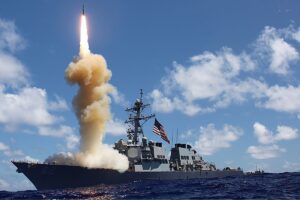
HMS Dragon is fitted with the Sea Viper missile system, capable of tracking hundreds of air targets at once, firing eight missiles at the rate of about one per second, and guiding them all onto different targets.
Defence Secretary John Healey MP said: “I have only praise for our Royal Navy personnel and civilian teams who have worked flat out to prepare HMS Dragon for deployment to the eastern Mediterranean.
“What is normally six weeks of work was completed in just six days — a remarkable effort delivered around the clock.”
Fleet Commander Vice-Admiral Steve Moorhouse said:“I am proud that our highly-professional personnel have responded in a short time to ensure HMS Dragon and the Wildcats from 815 Naval Air Squadron are fully prepared for their mission.”
The Wildcat helicopters from 815 Naval Air Squadron also deployed are equipped with Martlet missiles able to counter uncrewed aerial systems (UAS).
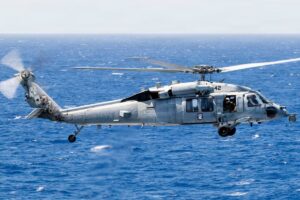
As well as two Wildcats, which arrived at British air base RAF Akrotiri on Cyprus in the cargo hold of C-17s, a Merlin with the Crowsnest Airborne Surveillance and Control (ASaC) radar has been dispatched.
The Crowsnest ASaC radar system fitted to the Merlin HM2 helicopter, deployed from 820 Naval Air Squadron in Culdrose, can search for incoming threats at ranges of up to 100 miles. Its Thales Searchwater system is optimised to detect small, low-altitude targets over water and in low-visibility environments.
Commanding Officer of 815 NAS, Commander James Woods, said: “This deployment highlights the flexibility of Maritime Aviation Strike, delivered by Wildcat HMA 2, and the commitment of 815 NAS to protect U.K. interests abroad and at home.”
Commanding Officer of RNAS Culdrose, Captain James Hall, added: “820 NAS already has experience of providing force protection from similar threats, having deployed ASaC aircraft on active operations in the Red Sea last year during the transits of the Carrier Strike Group led by HMS Prince of Wales during Operation Highmast.”
- You can read more details on the Royal Navy website