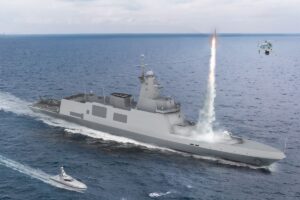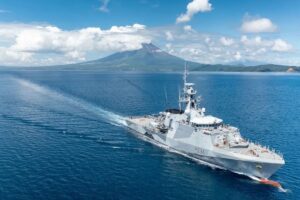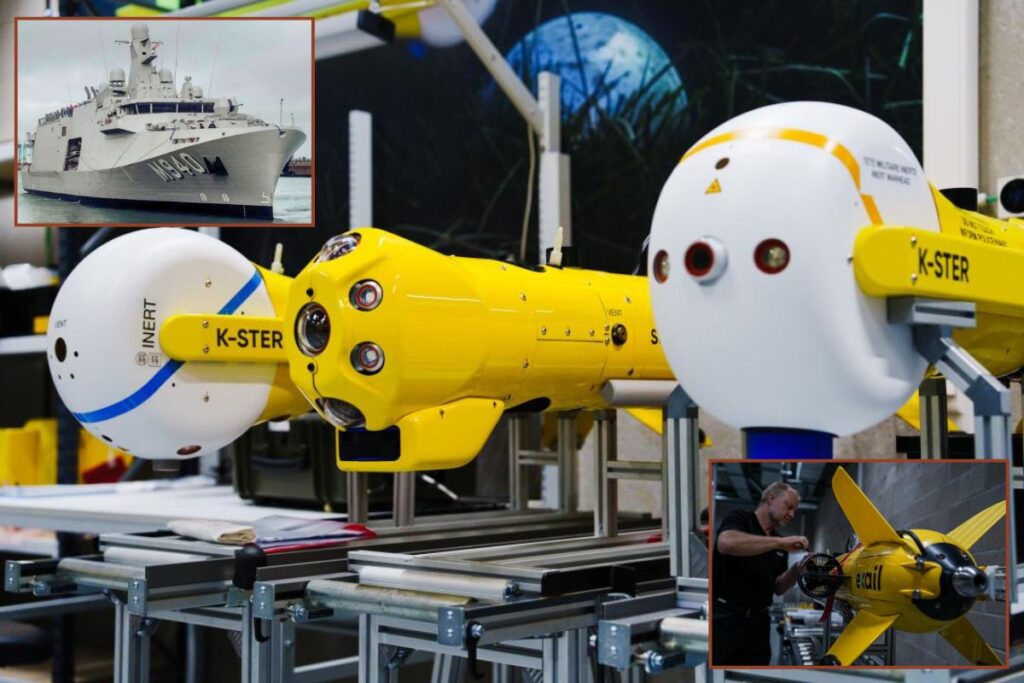
The joint Belgian-Dutch rMCM programme has taken another leap forward with the delivery of the first full set of uncrewed systems to equip the Belgian Navy’s BNS Oostende.
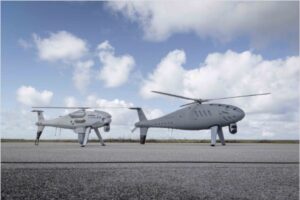
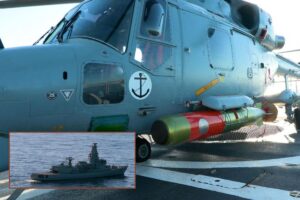
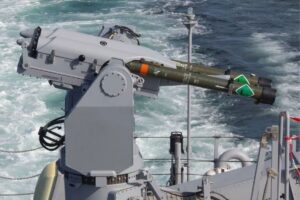
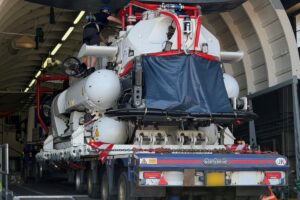
The new drones comprise the core of the new vessel’s stand-off mine warfare capability: they include Exail’s Umisoft control system, two Inspector 125 uncrewed surface vessels (USVs); three A-18 autonomous underwater vehicles (AUVs) with built-in sonar, two Seascan and K-Ster C mine identification and destruction systems; and two V200 Saab Skeldar uncrewed aerial systems (UAS).
Shortly these drones will also be supplemented by a dredger and two towed sonar arrays, as per an Exail press statement.
The Belgian Armed Forces took delivery of BNS Oostende, its first vessel under the replacement Mine CounterMeasures (rMCM) programme, in November last year. Last week’s handing-over of the rMCM toolbox also follows on from delivery of a mobile command-and-control (C2) station last month.
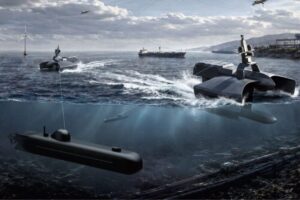
The rMCM vessels are designed for fully autonomous remote mine operations. They function as motherships capable of deploying underwater drones to detect and neutralize mines, surface drones to get them there, and aerial drones to spot floating or anchored mines.
Director of Exail Maritime Systems Jérôme Bendell said: “We are proud to deliver this toolbox to the Belgian Navy and the Royal Netherlands Navy, and even prouder to be the first in the world to bring such a fully robotic mine warfare capability. This programme positions the consortium at the forefront of modern mine countermeasures, contributing to the evolution of operational standards in this field.
“Beyond delivery, we are now entering a decisive phase: accompanying the Navies in taking full ownership of this unique capability. Together, we are shaping the future standards of mine warfare within NATO and strengthening European strategic autonomy.”
In total 12 of the 83-metre ships will eventually be built for the Dutch and Belgian navies; the Vlissingen, the first Royal Netherlands Navy rMCM vessel, arrived in the Dutch naval port of Den Helder at the end of February ahead of her scheduled commissioning into active service, expected in May this year.
- You can read more details on the Exail website