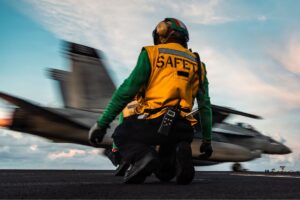
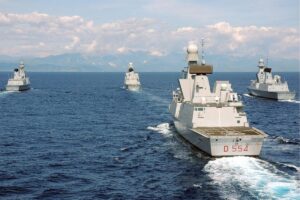
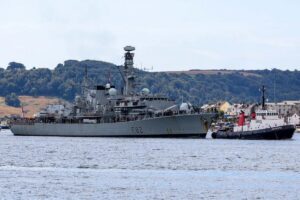
Naval assets from 14 NATO allies have come together for the resumption of Exercise Neptune Strike 2025, including the world’s largest aircraft carrier, the USS Gerald R. Ford.
The 333-metre vessel, the largest warship yet built, and her associated carrier strike group (CSG) are leading American involvement in the exercise, which restarted on Thursday.
The other nations taking part are Croatia, Finland, France, Germany, Greece, Italy, Lithuania, Norway, Poland, Romania, Spain, Slovakia, and the United Kingdom.
The exercise is led by Naval Striking and Support Forces NATO (STRIKFORNATO) and will see ships and aircraft conducting long-range strike missions.
Its commander, Vice Admiral J.T. Anderson, said: “Our Neptune Strike enhanced vigilance activities represent important opportunities to coordinate and employ a wide range of combat forces throughout the European theatre and demonstrate our combined capability to respond to crises and provide collective defense to the Alliance.”
And commanding officer Captain David Skarosi commented: “USS Gerald R. Ford is honored to participate in this iteration of NATO’s Neptune Strike and exercise our high-end maritime strike capabilities side-by-side with our allies.”
The US CSG also includes Arleigh Burke-class destroyers USS Bainbridge, USS Mahan, and the USS Winston S. Churchill.
The first element of this year’s Neptune Strike began in April and included multiple aircraft carrier and amphibious strike groups. Participants were Bulgaria, Canada, France, Greece, Italy, Northern Macedonia, Norway, Portugal, Romania, Spain, Türkiye, the U.K. and the United States.
Its cited aims were “to maintain freedom of navigation and manoeuvre in NATO’s area of operations, to secure strategic maritime chokepoints, to conduct deterrence and vigilance, and to increase the interoperability in operational domains.”
A series of anti-submarine warfare exercises were carried out in the Eastern Mediterranean Sea. The first leg also included operations in June led by Spanish Navy flagship helicopter landing dock (LHD) Juan Carlos I which saw long-range strikes from the central Mediterranean Sea targeting training ranges in Croatia, Slovakia and Romania.
- You can read more details on the STRIKFORNATO website and the U.S. Navy website