HavocAI claims its recent test in Portugal represents the first live demonstration of coordinated uncrewed air and sea systems where GPS signals were blocked.
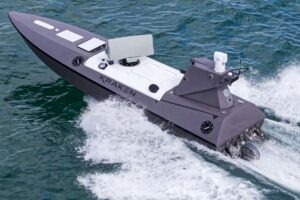
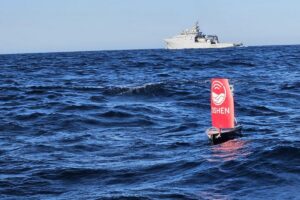
As per a company press statement, the firm conducted a test at Troia — the venue for the annual REPMUS robotics exercises run by the Portuguese Navy — that showcased its new GPS-denied integrated air–sea autonomy capabilities.
It said: “During a series of live runs, HavocAI’s systems executed a complex maritime mission that demonstrated resilient autonomy in a GPS-denied environment.
“Multiple runs were conducted under international signal degradation, and all platforms maintained mission performance through alternate navigation and timing solutions.
“The demonstration also showcased fused, real-time sensor inputs across both air and surface platforms (Maritime Domain Awareness), identification and tracking of a designated vessel of interest (Automatic Target Recognition), and autonomous execution of the full kill chain (Target Detection, Classification & Engagement).”
The demonstration, which was reportedly viewed by observers from a variety of NATO allies and friendly nations, used HavocAI’s single-screen interface, dubbed Havoc Control, to monitor and task the multidomain systems.
CEO and co-founder of HavocAI Paul Lwin commented: “This demonstration cements HavocAI’s position as a leader in next-generation autonomous maritime systems, bringing to market capabilities that were previously theoretical or confined to simulation.”
He added: “As global defence forces accelerate their shift toward distributed autonomy, HavocAI is delivering operational, field-ready systems that redefine what’s possible in multi-domain coordination.
“This is a paradigm shift in how navies think about distributed operations in contested seas and is a key milestone to putting thousands of autonomous platforms in the Pacific in the next two years.”
- You can read more details on Havoc AI’s news release and on the Havoc AI website