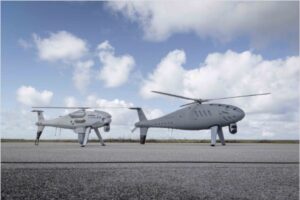
Proteus, the Royal Navy’s pioneering helicopter-sized and fully autonomous uncrewed aerial system (UAS), has made its maiden flight.
Built by Leonardo as a demonstrator, the prototype took off from Predannack Airfield in Cornwall last week and completed a short test routine. Although closely monitored for safety, the UAS flew completely independently.
The UAS is paving the way for future uncrewed drones which will operate alongside the Navy’s crewed platforms as part of its Atlantic Bastion anti-submarine warfare (ASW) programme to keep the North Atlantic under constant surveillance.
Proteus has a payload in excess of 1,000kg, meaning it can potentially carry a variety of different sensors and equipment.
The RN’s Deputy Director Aviation Future Programmes Commodore Steve Bolton said: “The successful first flight of Proteus is a significant step in delivering the Royal Navy’s maritime aviation transformation vision, and to demonstrating our steadfast commitment to investing in autonomy as part of a hybrid air wing.”
And Managing Director Helicopters UK at Leonardo Nigel Colman added: “Proteus represents a step-change in how maritime aviation can deliver persistence, adaptability and reach — conducting the dull, dirty and dangerous missions in challenging environments without putting human operators at risk.
“As the UK’s only end-to-end rotary wing manufacturer it has been a pleasure working with the Royal Navy and seeing Proteus take off for the first time after being designed, developed, and manufactured at Leonardo’s Yeovil site is a fantastic milestone.”
- You can read more details on the Royal Navy website