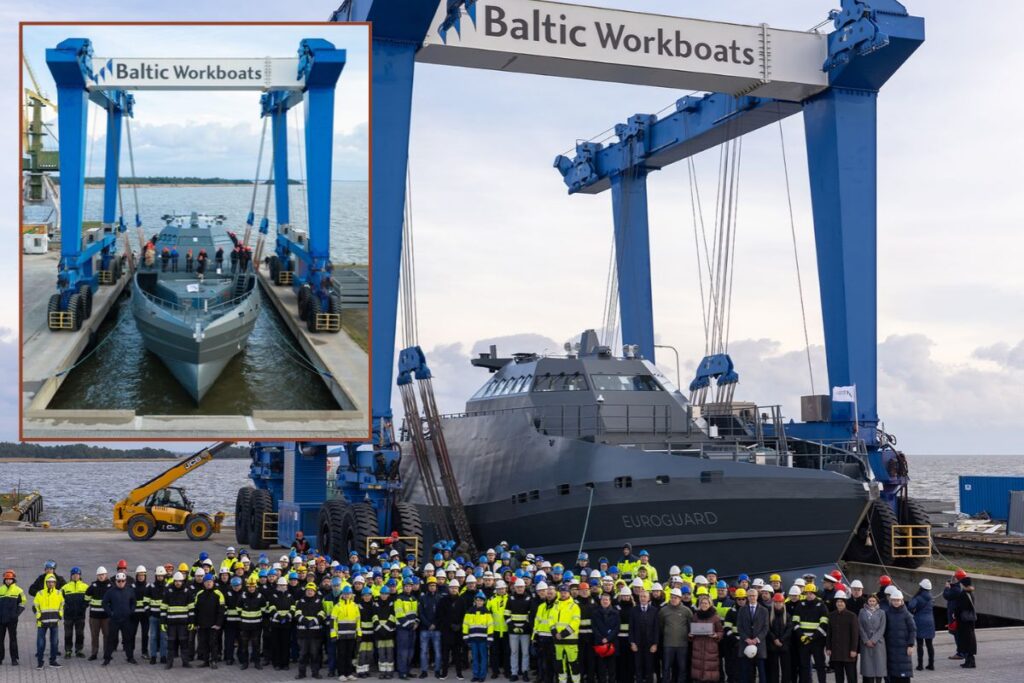
Estonian shipyard Baltic Workboats has launched an EU-funded semi-autonomous vessel intended to help guard critical undersea infrastructure (CUI).
Euroguard is a 45-metre prototype built to a modular design; it can be used to support a range of maritime security missions, including patrol and surveillance, mine warfare, seabed and CUI protection, search and rescue, and the deployment and control of uncrewed systems.
The vessel will be used as a testbed to develop both autonomous navigation and shored-based remote control systems. It’s capable of at least 20 knots, and has a range in excess of 2,000 nautical miles and ten days’ endurance.
The €95 million (£80 million) programme has been backed by a €65 million grant from the European Defence Fund. The ship has been developed by an Estonian-led consortium of ten European nations and 27 firms, including Thales, Leonardo, Naval Group, Navantia, Kongsberg and Damen.
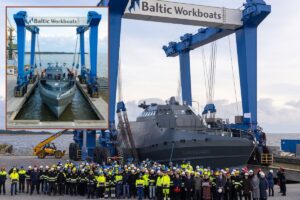
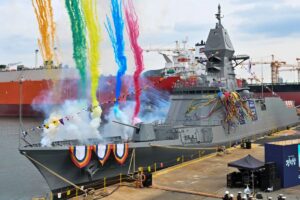
Last week the Euroguard vessel hit the water for the first time at Baltic Workboats’ shipyard in Nasva, Saaremaa. Estonia’s President Ülle Madise christened the ship at a special ceremony.
Chairman of Baltic Workboats’ Management Board Margus Vanaselja commented: “This is a new level in the history of Estonian shipbuilding and something all of Estonia and all of Europe can be proud of.”
He added: “What was launched in Nasva today is a vessel that points the way for future European naval developments. This project proves that smaller allies, too, can make a truly decisive contribution to developing the defence capability of the European community.”
Work will now continue on final outfitting of the vessel, followed by sea trials and demonstrations scheduled to be carried out during 2027.
- You can read more details on the Baltic Workboats website