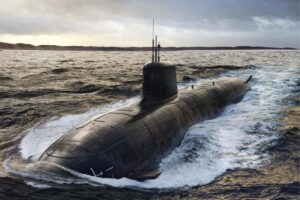
German firm TKMS has been selected to build up to 12 new submarines for the Royal Canadian Navy (RCN), with the first boat to be delivered in 2033.
The Canadian Government yesterday (Monday) announced it had picked TKMS’ Type 212CD design over the KSS-III boat put forward by the other shortlisted bidder, Hanwha Ocean.
The RCN is seeking to procure up to 12 Arctic-capable submarines in a deal expected to be worth in the region of about £32 billion, or C$60 billion. The Canadian Government described the CPSP deal as “the largest defence procurement in Canadian history.”
TKMS said it expected to deliver the first new Canadian submarine in 2033; the Canadian Government statement noted: “Canada will conclude contracting no later than the end of 2027, with the first four submarines to be delivered ahead of schedule, in 2034.”
Prime Minister of Canada Mark Carney said: “We are making the largest defence procurement in our nation’s history with speed, ambition, and discipline.
“Canada’s next submarine fleet will secure our coastlines and waters, and their construction will have enormous, lasting benefits for Canadian industries and workers.”
As per Canada’s 2025 statement: “The RCN requires a new submarine fleet that will be deployable in the Arctic with extended range and endurance that will provide stealth, persistence and lethality as key capabilities.
“The future Canadian Patrol Submarine will employ a unique combination of these attributes to ensure that Canada can detect, track, deter and, if necessary, defeat adversaries in all three of Canada’s oceans.”
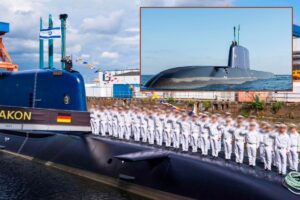
The Type 212CD platform was initially developed for the German and Norwegian navies; the shipbuilder is already building six submarines for each of these two nations.
The diesel-electric boats are 73m long, displace 2,800 tonnes fully submerged and feature an air independent propulsion (AIP) system using lithium batteries charged by two diesel engines. They are capable of speeds in excess of 20 knots and have an endurance of about 41 days.
TKMS said its selection marked “a new chapter in defence and industrial cooperation between Canada, Germany and Norway.”
It added: “This marks a historic milestone for Canada, Germany and Norway and the beginning of a long-term strategic partnership that will strengthen security, industrial cooperation and collective defence across the North Atlantic.”
CEO at TKMS Oliver Burkhard commented: “With the CPSP, we are proud to take on the largest single order in the history of TKMS – and with it comes a clear promise: we will deliver. The CPSP is more than a procurement program; it is the foundation of a long-term strategic partnership between trusted allies.”
He added: “Canada will benefit from the full force of the current unique European program – the combined strength of Germany and Norway, united in purpose, and committed to delivering the very best and to create a new kind of transatlantic coalition.”
Back in August 2025 TKMS and Korean defence prime Hanwha Ocean were shortlisted as potential suppliers for the Canadian Patrol Submarine Project (CPSP).
Hanwha Ocean’s offering for the CPSP was its 3,000-ton KSS-III submarine, which uses air-independent propulsion (AIP) and lithium-ion batteries to give it a three-week endurance and a range of up to 7,000 nautical miles.
In June Republic of Korea Navy (ROKN) submarine Dosan Ahn Changho had sailed to a Canadian naval base in British Columbia as the firm pressed its case.
Canada’s statement yesterday selecting TKMS also named Hanwha as its “reserve” supplier and noted: “In the event that negotiations with the preferred supplier are unsuccessful, Canada may designate Hanwha Ocean as the preferred supplier and enter into negotiations.”
Canada’s Secretary of State (Defence Procurement) Stephen Fuhr remarked: “Completing a competitive process of this scale in roughly eight months, while maintaining a rigorous and fair evaluation, is an important milestone in modernising defence procurement.
“It reflects an understanding that national security and economic security go hand in hand. We evaluated proposals on their ability to deliver world-class capability to the Royal Canadian Navy, and on the long-term benefits they will create for Canadian workers, industry, and innovation through our Build-Partner-Buy approach.”
The new CPSP boats will replace Canada’s four ageing Victoria-class submarines, which were acquired from the Royal Navy towards the end of the 1990s. Three came into active service in the mid-2000s; the fourth in 2015.
- You can read more details on the TKMS website and the Canadian Government website