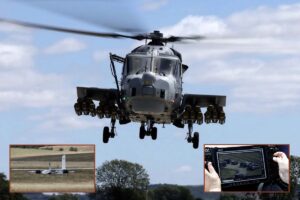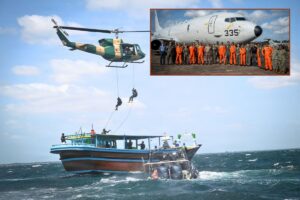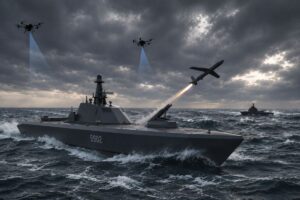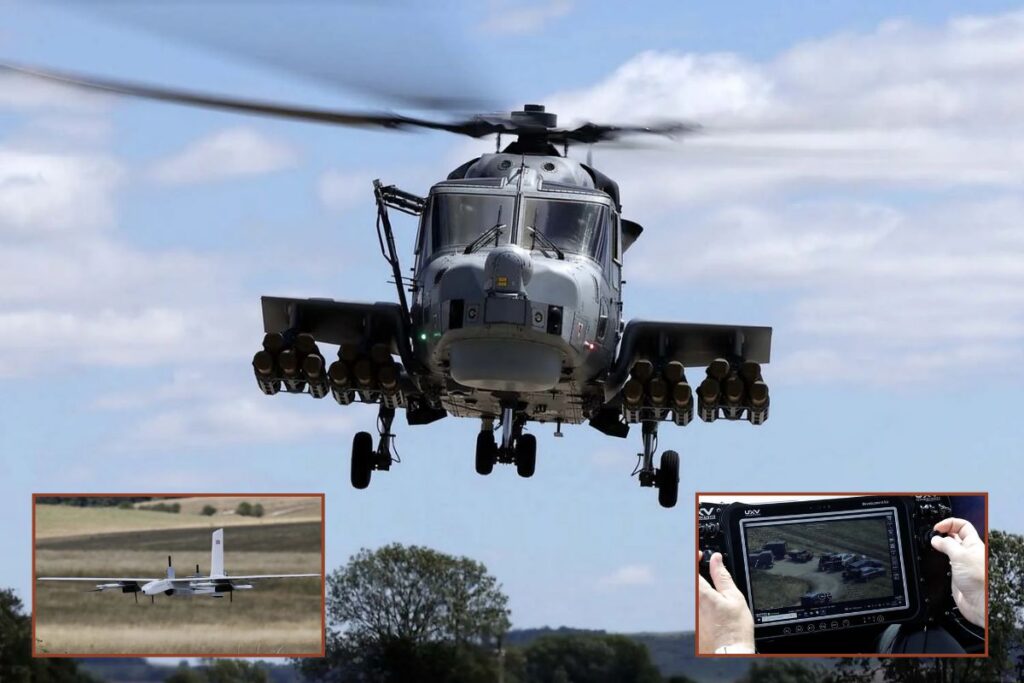
A Royal Navy Wildcat helicopter teamed up with a swarm of aerial drones controlled at distance in a series of landmark trials.
Exercise Dragon Rider, carried out over 200 miles from a base at Salisbury Plain last week, saw the crew aboard a specially-modified Wildcat maritime strike helicopter co-ordinated with multiple uncrewed aerial systems (UAS).
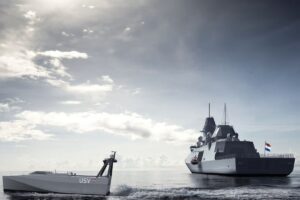
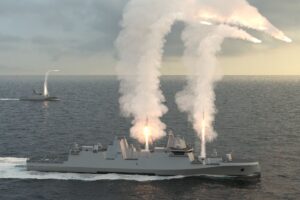
As per a Royal Navy press statement: “The trials show the Hybrid Navy plans in action, with drones and crewed ships and helicopters working together to advance the integration of new systems with current equipment.”
At its core was MANET (Mobile Ad-hoc Network) a secure mesh communications system already battle-tested in Ukraine.
The week-long trials, a continuation of the Eagles Eye serial in Cornwall in January, were conducted by RNAS Yeovilton’s Wildcat Maritime Force, more formally referred to as the Maritime Aviation Strike Operational Advantage Group.
The MANET system has the ability to simultaneously link Royal Marines on the ground with Wildcat helicopter crews, uncrewed systems, and ship commanders.
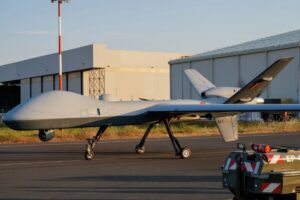
During the trials, a Wildcat fitted with additional sensors sent data fed from multiple drones flying over southern England to operators in a central hub at RNAS Yeovilton.
Real-time drone video feeds enabled target identification and messaging, and remote operators took charge of the uncrewed systems over the network. Future tests will introduce remote operation over satellite links, extending at-range control globally.
The RN noted: “The exercise vastly extended the range at which drones can operate ahead of a ship or task group — something previously limited by how far their radio signals could reach.”
Officer in Command of the Wildcat Maritime Force commented: “The trial proved that this low-cost system is ready for the Royal Navy to use right now.
“This successful test is a major step forward in keeping human crews safer by letting drones handle dangerous tasks further ahead of the main military force, whilst also greatly increasing the number of units we can field at the same time.”
- You can read more details on the Royal Navy website