The Royal Australian Navy’s dedicated uncrewed air systems (UAS) squadron has acquired a fourth new platform for maritime ISR missions.
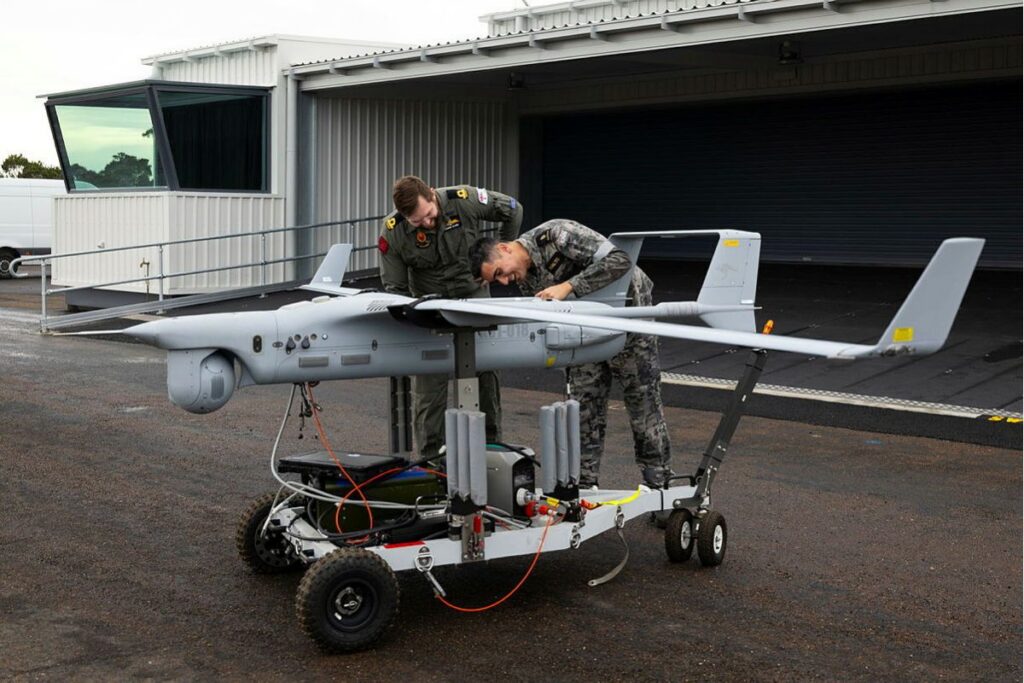
The RAN’s 822X Squadron recently flew the A-61 Integrator built by Boeing subsidiary Insitu. The fixed-wing drone, already in service with the Australian Army, is a larger and more advanced version of the firm’s ScanEagle UAS.
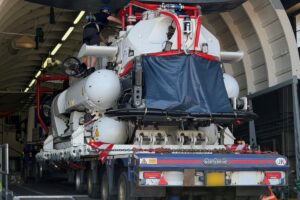
Like ScanEagle, Integrator does not require a traditional runway, instead using a trailer-mounted pneumatic catapult launcher and a “SkyHook” wire recovery system, enabling flexible deployment on naval vessels.
The drone, which is 2.5 metres long with a wingspan of almost 5 metres, has a maximum payload capacity of 18kg, an operational ceiling of almost 20,000 feet, and up to 16 hours endurance.
It will be used by the RAN to enhance its intelligence, surveillance and reconnaissance (ISR) capabilities, boosting the force’s maritime domain awareness. As well as electro-optic high-resolution cameras, it boasts infrared imagers and markers for night operations and laser rangefinders and designators for precision targeting.
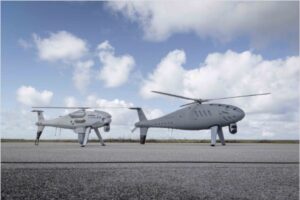
The Integrator is the fourth uncrewed aerial system (UAS) platform operated by the squadron since its commissioning in 2018 as Navy’s dedicated UAS squadron.Other platforms include the ScanEagle and Schiebel’s S-100 Camcopter rotary-wing drone.
The Commanding Officer of 822X Squadron praised his team’s ability to pivot quickly to flying a new UAS.
Commander Jeffery Choat commented: “The introduction of the A-61 Integrator is a significant step forward for Navy’s uncrewed aviation capability, but platforms alone do not deliver outcomes.
“The real strength of 822X Squadron lies in our people — the remote pilot warfare officers, maintainers and support staff — whose professionalism, adaptability and commitment have enabled us to transition rapidly between systems while continuing to support other UAS activities.”
- You can read more details on the Defence Australia website