The total value of Raytheon’s contract to supply next-generation radar systems for U.S. Navy vessels could rise from $1.8 billion to $3.3 billion.
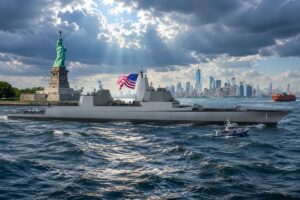
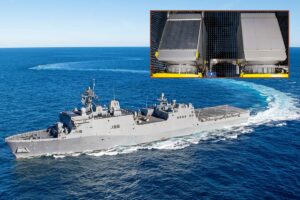
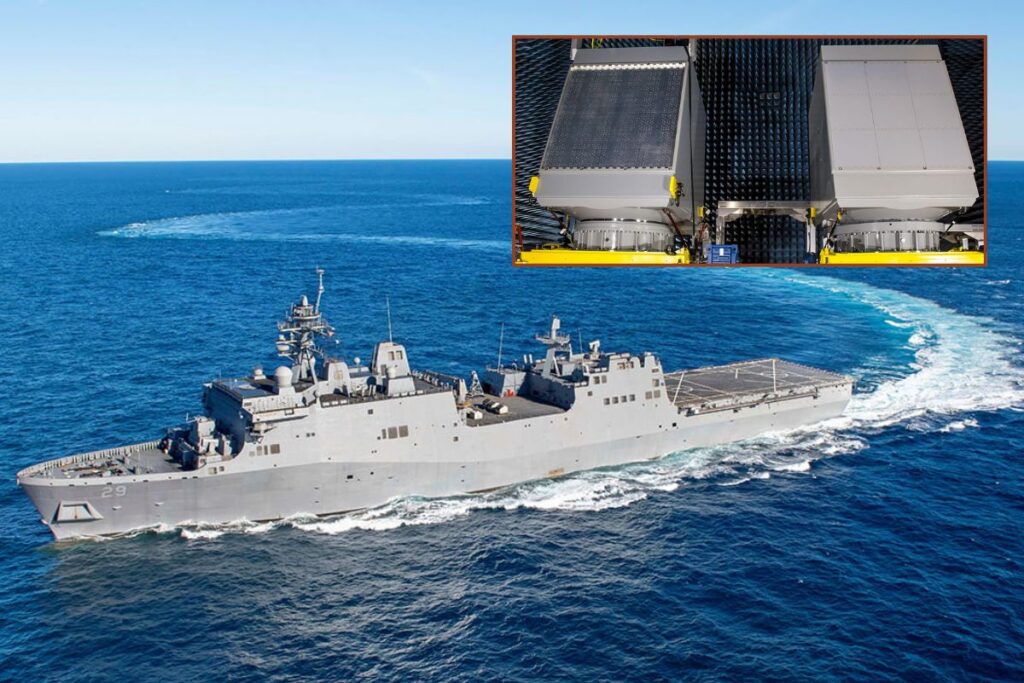
At present, two ships in active operational service with the American fleet carry variants of the RTX subsidiary’s SPY-6 radar. They are the San Antonio-class amphibious transport dock USS Richard M. McCool Jr. and the first Flight III Arleigh Burke-class guided-missile destroyer USS Jack H. Lucas.
Versions of the SPY-6 radar have also been installed on a further 11 warships, all of which are currently undergoing pre-commissioning tests and sea trials.
As per a company press statement, however, the $1.8 billion hardware production and sustainment contract awarded towards the end of last month includes options which could bring the cumulative value to $3.3 billion. Across the next ten years, SPY-6 variants are expected to be fitted to in excess of 50 U.S. Navy warships.
Raytheon’s Naval Power President Barbara Borgonovi commented: “This contract extension reflects the Navy’s confidence in our ability to deliver advanced, reliable and scalable radar solutions. Our continued investment and commitment to ramping production will ensure the fleet has the sensing advantage to stay ahead of evolving threats for decades to come.”
USS Richard M. McCool Jr. features the SPY-6(V)2 variant, featuring a single rotating array; USS Jack H. Lucas is fitted with the four-fixed-face (V)1 system offering comprehensive air and missile defence capabilities.
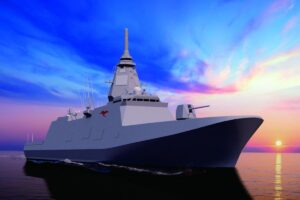
The (V)3 variant has three fixed faces distributed around a warship’s island or mast; it has been configured for Gerald R. Ford-class aircraft carriers and Constellation-class guided-missile frigates.
The scaled-down (V)4 configuration has four faces, like the V(1) variant, but is designed to be retro-it to legacy vessels during mid-life upgrades and has fewer Radar Modular Assemblies (RMAs) per face.
- You can read more details on the RTX website