Denmark has confirmed it will acquire two Poseidon P-8A maritime patrol aircraft (MPAs) to strengthen its Arctic and North Atlantic security.
Its Minister of Defence Jeppe Bruus commented: “In recent years, the Danish Defence Force has strengthened its military presence with close involvement from Greenland’s Naalakkersuisut, and with maritime patrol aircraft, Denmark’s ability to enforce sovereignty and monitor the region is significantly strengthened.
“In addition, the acquisition is a clear indication that we take our common task in NATO seriously.”
And Chief of Defence General Michael Wiggers Hyldgaard added: “We must be able to defend all parts of the kingdom. This also applies to the Arctic and North Atlantic areas. And we have an obligation to NATO to contribute to collective defense, not least in terms of delivering on force targets for anti-submarine warfare.
“With the acquisition of two new P-8 aircraft, we are strengthening the Armed Forces’ task performance in terms of interception and surveillance at very long distances. This will, among other things, contribute to our being able to achieve an even better common situational understanding.”
Denmark has stated it will now begin to investigate possibilities for cooperation with an unnamed “NATO ally” on a joint unit, potentially located on the same air base to leverage procurement, maintenance and training synergies.
America gave the deal the provisional green light after Denmark intimated its wish to acquire P-8As for maritime surveillance at the turn of the year.
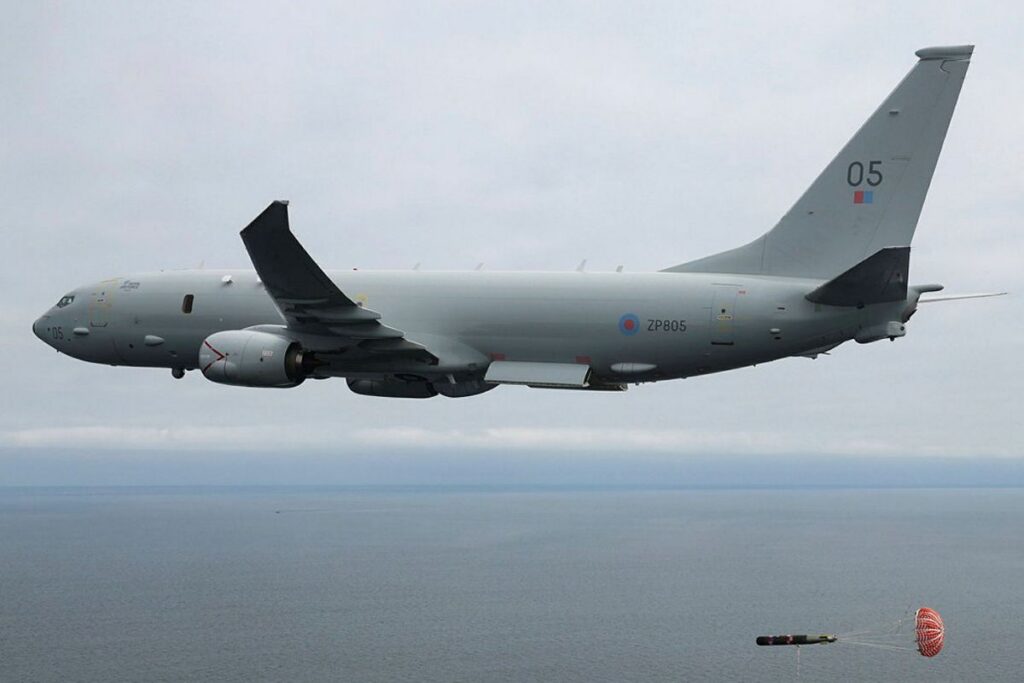
The P-8A Poseidon, built by Boeing, is an MPA developed from its 737 commercial airliner platform. It is designed to hunt submarines, track surface ships, and conduct search and rescue (SAR) missions.
It can deploy sonobuoys into the water to listen for and track enemy subs and carries high-tech radar and advanced cameras and sensors to gather high-definition video, photos, and electronic data.
The MPA is equipped with lightweight torpedoes to launch against submarines and it can also carry anti-ship missiles, such as Boeing’s Harpoon, and four pylons mounted under the wings.
It can also drop life rafts and survival equipment to people stranded at sea and coordinate rescue efforts.
The German Navy recently became the latest European nation to start operating the aircraft; its first P-8A was delivered in October last year. The variants bought by the Bundeswehr also carry an infrared anti-missile self-protection system.
More than 160 Poseidons are currently in operation worldwide. As well as the USA, other operators include the U.K., Norway, Australia, India, South Korea, and New Zealand.
- You can read more details on the Danish Ministry of Defence website